When Airplane Cabins Were Smoking Lounges: The Era America Lit Up at 30,000 Feet
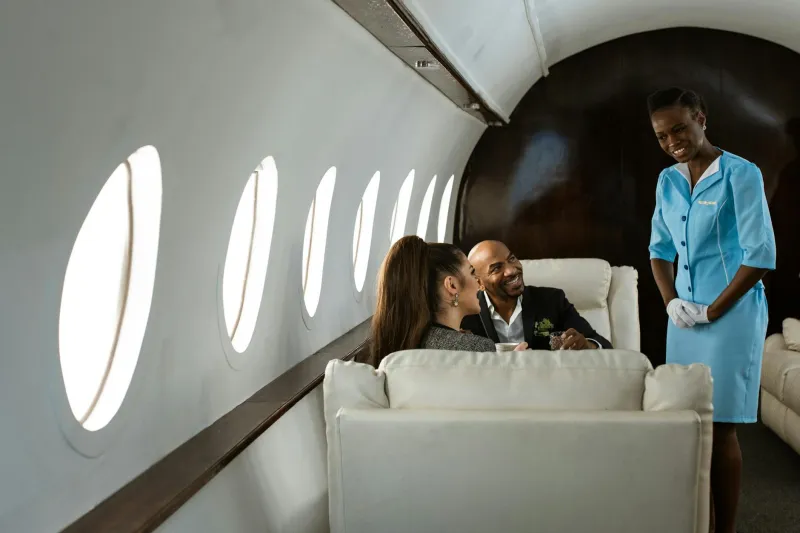
Picture this: you're settling into your airplane seat in 1975, and the passenger next to you pulls out a pack of Marlboros. The flight attendant doesn't bat an eye — in fact, she's got an ashtray ready to hand over. Welcome to the era when America's skies were thick with more than just clouds.
The Golden Age of Airborne Ashtrays
For most of commercial aviation's history, smoking on planes wasn't just allowed — it was expected. Airlines installed ashtrays in every armrest, and flight attendants were trained to empty them regularly during flights. The "smoking section" was typically the back half of the plane, though the recycled air meant everyone was breathing the same smoky atmosphere anyway.
Pan Am, TWA, and other major carriers actually marketed their flights to smokers. Some airlines offered premium cigarette brands as part of their first-class service, and duty-free tobacco sales were a significant revenue stream. The sight of passengers lighting up during takeoff wasn't unusual — it was Tuesday.
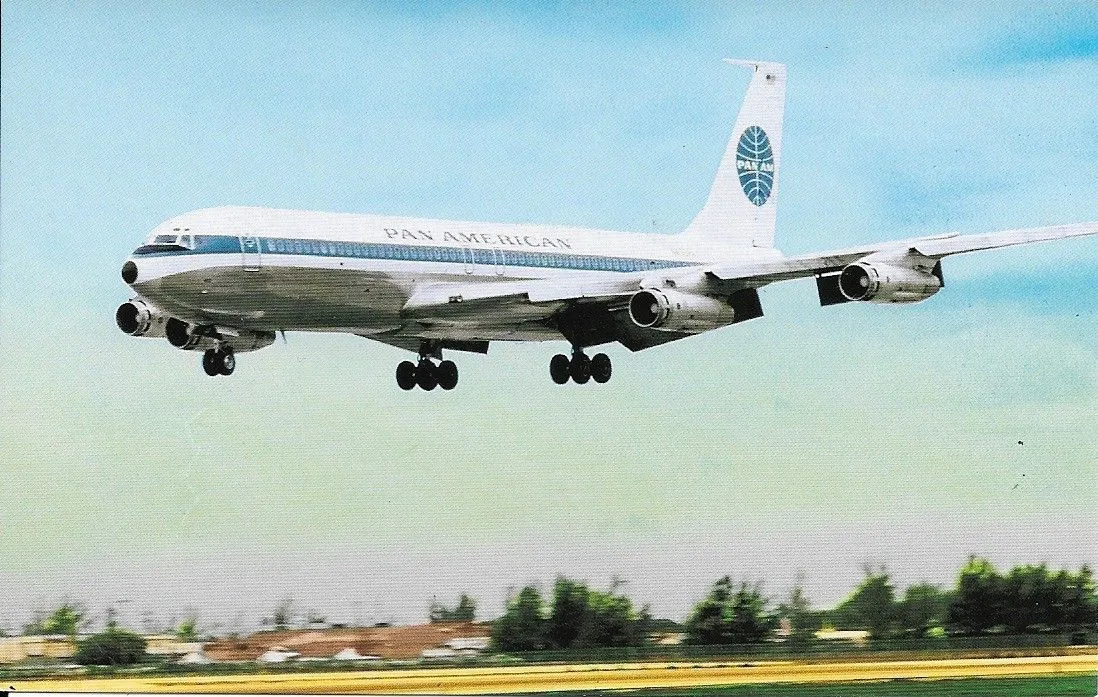 Photo: Pan Am, via i.pinimg.com
By the 1970s, roughly 40% of American adults smoked, and the idea that they'd have to abstain during a cross-country flight seemed unreasonable. Airlines worried that smoking bans would drive customers to competitors, creating a kind of tobacco prisoner's dilemma that kept the practice alive longer than it might have otherwise.
When Everywhere Was a Smoking Section
Airplanes weren't unique in their tolerance for tobacco. In the 1960s and 70s, Americans smoked virtually everywhere: offices had designated smoking areas (often just wherever people felt like lighting up), restaurants served meals through clouds of cigarette smoke, and even hospitals allowed smoking in waiting rooms and patient lounges.
Movie theaters had smoking sections. Grocery stores sold cigarettes at every checkout lane, and clerks often had one dangling from their lips while ringing up customers. College professors smoked during lectures, and students could light up in dormitory study halls. The Mad Men aesthetic wasn't artistic license — it was documentary realism.
Doctors' offices had ashtrays in examination rooms. Banks provided them at teller windows. Even some churches had designated smoking areas for parishioners who couldn't make it through a full service without nicotine. The idea that smoking might be inappropriate in any indoor space was largely foreign to American culture.
The Science That Changed Everything
The shift began with mounting scientific evidence about secondhand smoke. A 1986 Surgeon General's report concluded that involuntary smoking caused lung cancer in healthy nonsmokers — a finding that transformed smoking from a personal choice into a public health issue affecting everyone in the vicinity.
Sudden Infant Death Syndrome (SIDS) research revealed that babies exposed to cigarette smoke faced dramatically higher risks. Studies showed that restaurant workers in smoking establishments had elevated rates of lung cancer despite never smoking themselves. Flight attendants, who spent their careers breathing recycled cabin air thick with tobacco smoke, became poster children for secondhand smoke exposure.
The numbers were staggering: the Environmental Protection Agency estimated that secondhand smoke killed 3,000 nonsmokers annually from lung cancer alone, with thousands more dying from heart disease. Children exposed to household smoking showed higher rates of asthma, ear infections, and respiratory problems.
 Photo: Environmental Protection Agency, via thumbs.dreamstime.com
The Remarkably Swift Cultural Transformation
What's most surprising about America's smoking transformation is how quickly it happened. In 1971, cigarette advertising was banned from television and radio. By 1988, smoking was prohibited on domestic flights under two hours. The ban extended to all domestic flights by 1990, and international flights followed by 2000.
California led the charge with workplace smoking bans in the 1990s, and other states rapidly followed. Restaurants went smoke-free, then bars, then entire cities. What had been perfectly normal behavior for generations suddenly became socially unacceptable — and legally prohibited — in most public spaces.
The speed of this cultural shift was unprecedented. In 1985, you could smoke on a plane while flying to a restaurant where you'd smoke during dinner, then catch a movie in a theater's smoking section. By 2005, none of those activities were possible in most of America. An entire generation grew up never experiencing indoor public smoking as normal.
The New Reality of Clean Air
Today's travelers who've never experienced a smoking flight can barely imagine what those cabins were like. The air was visibly hazy, clothes reeked for days after travel, and nonsmokers often suffered headaches and irritated eyes during long flights. Flight attendants developed chronic respiratory problems at rates far higher than the general population.
Modern aircraft air filtration systems, designed partly in response to smoking concerns, now cycle cabin air every few minutes through hospital-grade HEPA filters. The air quality at 35,000 feet is often cleaner than what you'd breathe in many office buildings.
Restaurants that once reeked of cigarette smoke now worry about the aroma of their food being perfect. Office buildings that once had smoke-stained ceilings and permanent tobacco odors are now smoke-free environments where the smell of cigarettes on someone's clothing is immediately noticeable.
The Lingering Legacy
Commercial aircraft still have ashtrays in lavatories — not because smoking is allowed, but because federal regulations require them in case someone breaks the rules. It's a small reminder of how recently America's relationship with tobacco was completely different.
The transformation of America's public spaces from smoke-filled to smoke-free represents one of the most dramatic cultural shifts in modern history. It happened within a single generation, driven by scientific evidence that couldn't be ignored and a growing recognition that personal freedom shouldn't come at the expense of others' health.
For anyone under 40, the idea of smoking on an airplane seems as foreign as using a rotary phone. But for millions of Americans, it's a vivid memory of how different the world used to be — and how quickly normal can become unthinkable.