The Great American Slowdown: How We Forgot the Art of Actually Taking Time Off
When August Meant Goodbye
Every July, Tom Richardson would do something that seems almost quaint by today's standards: he'd clean out his desk, update his colleagues on ongoing projects, and put an "Out of Office" sign on his door that wouldn't come down until Labor Day. Richardson worked for a mid-sized insurance company in Cleveland, and like most white-collar Americans in 1965, he took his full two weeks of vacation time — and often more.
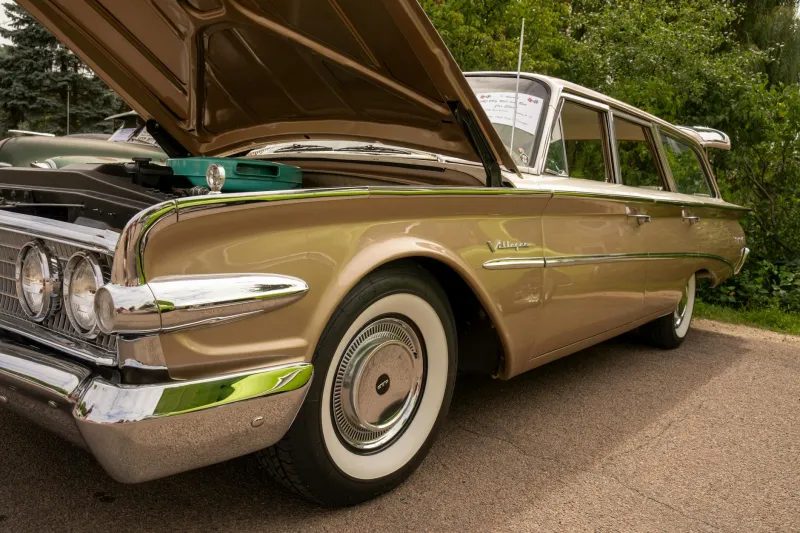
The ritual was sacred. Richardson's family would pack their wood-paneled station wagon with enough supplies for a cross-country expedition and disappear to a lake cabin in Michigan, where the only connection to the outside world was a rotary phone that rarely rang. His boss didn't expect to hear from him. His clients knew he was unreachable. The whole system was designed around the assumption that people needed — and deserved — real time away from work.
The Postwar Vacation Boom
This wasn't always the American way. Before World War II, paid vacation was largely a privilege of the wealthy. But the postwar economic boom changed everything. Strong unions negotiated vacation time as a standard benefit, and a growing middle class suddenly had both the time and money to explore their own country.
The two-week vacation became as American as baseball and apple pie. Families planned elaborate road trips to national parks, beach towns, and tourist attractions that sprang up specifically to serve this new leisure class. Motels, diners, and roadside attractions flourished along major highways. The family vacation became a rite of passage, a shared cultural experience that defined American summers.
By the 1970s, the average American worker took 20.3 vacation days per year — and actually used them all. Taking vacation wasn't seen as lazy or uncommitted; it was seen as necessary for maintaining both mental health and job performance.
The Slow Surrender
Somewhere between the economic upheavals of the 1980s and the digital revolution of the 2000s, America quietly abandoned its vacation culture. The shift happened gradually, almost imperceptibly, but the statistics tell a stark story.
Today, the average American worker receives 23 days of paid time off annually — more than their 1970s counterparts. But here's the twist: they only use 17 of those days. That means 768 million vacation days go unused every year, representing $65 billion in lost benefits that workers have essentially donated back to their employers.
Even when Americans do take time off, they don't really disconnect. A 2023 survey found that 87% of workers check work email during vacation, 70% take work calls, and 38% say they feel guilty about being unreachable. The two-week digital detox that defined Richardson's generation has been replaced by what researchers call "continuous partial work" — never fully on, never fully off.
The Always-On Economy
The transformation reflects broader changes in American work culture. The rise of knowledge work meant that "the office" became wherever you had a laptop. Email turned every moment into a potential work moment. Smartphones eliminated any remaining boundary between professional and personal time.
Companies began celebrating "hustle culture," where working nights and weekends became badges of honor rather than signs of poor work-life balance. Startups offered "unlimited vacation" policies that, paradoxically, led to employees taking less time off, not more. Without clear expectations, workers erred on the side of caution.
The gig economy further eroded vacation culture. When your income depends on being constantly available, taking time off feels financially irresponsible. Even traditional employees began thinking like freelancers, worried that being unreachable might cost them opportunities or signal lack of commitment.
What Other Countries Know
The contrast with other developed nations is striking. European workers average 25-30 vacation days annually and use nearly all of them. In France, it's illegal for employers to contact workers during vacation. German companies often shut down entirely for weeks in summer, forcing everyone to disconnect simultaneously.
These aren't lazy cultures — they're often more productive per hour worked than Americans. The difference is understanding that rest isn't the enemy of productivity; it's a prerequisite for it.
The Hidden Costs of Never Stopping
America's vacation deficit has consequences beyond individual burnout. Families report feeling disconnected, with parents and children struggling to find shared experiences that aren't interrupted by work demands. The tourism industry estimates that unused vacation days cost the economy $224 billion annually in lost spending.
Health researchers have identified "vacation deprivation syndrome" — chronic stress, decreased creativity, and increased illness rates among workers who don't take adequate time off. Ironically, the always-on culture that promises greater productivity often delivers the opposite: tired, stressed workers who make more mistakes and generate fewer innovative ideas.
The Pandemic Pause
COVID-19 briefly reminded Americans what downtime felt like. With nowhere to go and many businesses closed, families rediscovered simple pleasures: backyard camping, local hiking trails, extended board game sessions. For a few months, the frantic pace of modern life slowed to something resembling the rhythm their grandparents knew.
But as restrictions lifted, the old patterns returned with a vengeance. "Revenge travel" replaced thoughtful vacation planning, with Americans cramming multiple trips into compressed timeframes, often while still managing work obligations remotely.
Small Signs of Change
Some companies are recognizing the problem. A growing number offer "mandatory vacation" policies, requiring employees to take minimum amounts of time off. Others are experimenting with "right to disconnect" policies that prohibit work communication outside business hours.
Younger workers, particularly Gen Z, show signs of prioritizing work-life balance over traditional career advancement. They're more likely to use their vacation days, set boundaries around work communication, and choose employers based on vacation policies.
The Road Back to Rest
Recovering America's vacation culture won't be easy. It requires recognizing that the always-available economy isn't just unsustainable — it's counterproductive. The most innovative companies and happiest workers understand what Tom Richardson's generation knew instinctively: sometimes the best thing you can do for your career is to completely forget about it for a while.
The two-week digital detox might seem impossible in today's connected world, but it's exactly what makes it so valuable. In a culture obsessed with optimization, the most radical act might be deliberately choosing to slow down, disconnect, and remember that productivity isn't the only measure of a life well-lived.
America once led the world in creating a culture where working people could afford real time off. Perhaps it's time to reclaim that legacy, one unused vacation day at a time.