When Love Letters Took Forever and Silence Didn't Mean Rejection: America's Lost Art of Patient Communication
When Love Letters Took Forever and Silence Didn't Mean Rejection: America's Lost Art of Patient Communication
In 1889, Sarah Mitchell of Portland, Maine, received the letter that changed everything. Her husband Thomas, working the lumber camps in Minnesota, had been injured in a logging accident. The letter was dated six weeks earlier. For a month and a half, she'd been going about her daily routine—hanging laundry, teaching their children, chatting with neighbors—while Thomas lay in a camp hospital, possibly dying, eight hundred miles away.
 Photo: Portland, Maine, via i0.wp.com
This wasn't unusual. This was simply how American families lived.
Try explaining to Sarah that in 2024, her great-great-granddaughter would feel genuine anxiety if her boyfriend didn't respond to a text message within twenty minutes. The psychological gulf between these two realities reveals one of the most profound transformations in human experience: how we've rewired our emotional relationship with time, distance, and the people we love.
The Emotional Architecture of Slow Communication
For most of American history, communication required profound patience. A letter from New York to San Francisco took three weeks in 1850, assuming good weather and no Indian troubles. Families separated by migration, war, or work developed an entirely different psychology around staying connected.
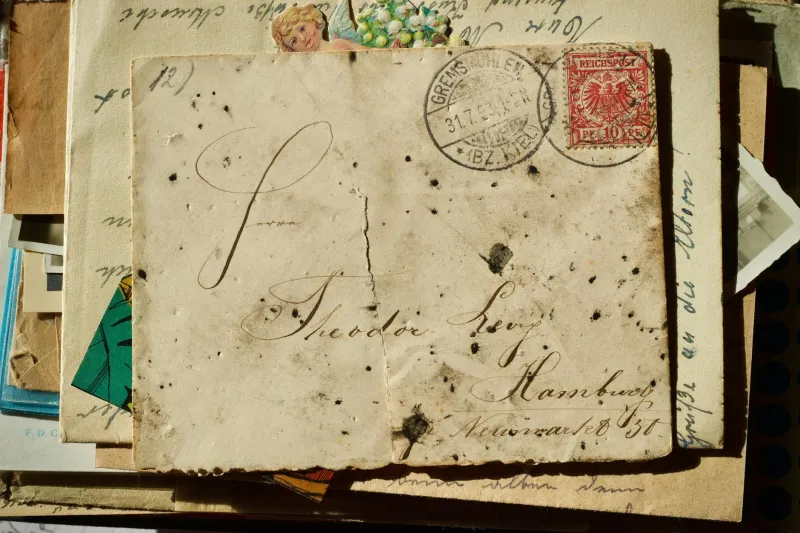
People wrote differently when every word mattered. Letters were events, not casual exchanges. You planned what to say, crafted your thoughts carefully, and tried to anticipate what your recipient would want to know weeks later when your words finally reached them. A single letter might contain news, questions, expressions of love, practical instructions, and philosophical reflections—because you couldn't count on another chance to communicate for months.
Parents sending children to distant relatives for education or work would spend weeks crafting letters that needed to sustain relationships across vast stretches of silence. Soldiers' families lived in perpetual uncertainty, knowing that the absence of mail could mean anything from delayed delivery to death on a battlefield.
This forced Americans to develop emotional skills we've largely lost: the ability to live with uncertainty, to maintain hope without constant confirmation, and to trust that silence didn't automatically signal disaster or rejection.
When Distance Measured in Days, Not Minutes
Consider the psychological reality of maintaining a long-distance relationship in 1870. If your fiancé moved to California for work, your relationship existed primarily in letters that took weeks to cross the continent. You'd write about your current feelings, knowing they'd be ancient history by the time your beloved read them. You'd respond to letters that addressed situations already resolved.
Couples learned to love across time zones of delay. They'd reference conversations that happened months earlier, build on thoughts that had evolved since writing, and maintain intimacy through words that arrived like echoes from the past.
This wasn't romantic—it was emotionally exhausting. But it was also normal. Americans developed patience as a survival skill, not a virtue. You learned to live with questions unanswered, to make decisions without consulting loved ones, and to find peace in uncertainty because anxiety served no purpose when information traveled at the speed of horses.
The Telegraph Revolution
The first crack in this system came with the telegraph in the 1840s. Suddenly, urgent news could cross the continent in hours instead of weeks. But telegraph messages cost money—serious money. A ten-word telegram from New York to Chicago in 1870 cost about $20 in today's dollars. You didn't chat via telegraph; you sent birth announcements, death notices, and business emergencies.
Families developed a new category of communication: the expensive urgent message. The arrival of a telegram often meant life-changing news. The casual, constant communication we take for granted today simply didn't exist. Most conversation still happened face-to-face or through carefully composed letters.
When the Telephone Rewired America
The telephone, spreading rapidly after 1900, began changing American psychology in ways we're still discovering. For the first time in human history, you could have a conversation across vast distances. But early telephone systems were expensive, unreliable, and often involved party lines where neighbors could listen to your calls.
Even as late as 1950, long-distance phone calls were events. Families scheduled them, gathered around the phone, and kept conversations brief due to cost. The idea of calling someone just to chat, or staying on the phone for hours, was economically impossible for most Americans.
The Anxiety of Instant Everything
Now consider the psychological landscape of 2024. We carry devices that can reach anyone, anywhere, instantly. We can see when someone has read our message, track whether they're online, and know their exact location. This technological power has created entirely new forms of anxiety.
The "read receipt" function alone would have seemed like science fiction to Sarah Mitchell, but it's now a source of daily stress for millions. We interpret response times as emotional barometers. A quick reply suggests enthusiasm; a delayed response hints at disinterest or anger. We've created a communication system that demands constant performance of attention and care.
Young Americans today report feeling genuine distress when friends don't respond to messages within an hour. The silence that Sarah Mitchell accepted as normal life now triggers fears of rejection, anger, or crisis. We've gained the ability to connect instantly but lost the emotional resilience that made delayed communication bearable.
What We Lost in Translation
The shift from patient communication to instant messaging has fundamentally altered how Americans form and maintain relationships. When every conversation required effort and planning, people chose their words more carefully. When silence was normal, we didn't interpret it as rejection.
Modern communication is more frequent but often less thoughtful. We send dozens of brief messages instead of one carefully composed letter. We share immediate reactions rather than considered reflections. We've gained efficiency but lost the deep contemplation that slow communication encouraged.
Perhaps most significantly, we've lost the ability to be comfortable with uncertainty. Sarah Mitchell lived for weeks not knowing if her husband was alive or dead, and somehow maintained her sanity and continued caring for her family. Today, we struggle to wait twenty minutes for a text response without anxiety.
The Hidden Cost of Connection
Instant communication has eliminated the geographic barriers that once separated families and lovers, but it's created new emotional barriers. The expectation of constant availability has made genuine solitude nearly impossible. The ability to reach anyone instantly has made us less tolerant of being unreachable ourselves.
We've solved the problem of distance but created new problems of presence. Sarah Mitchell's great-great-granddaughter can video chat with someone on another continent, but she may have lost the ability to sit quietly with her own thoughts for an hour without feeling compelled to check her phone.
The transformation from patient letters to anxious texting represents more than technological progress—it's a fundamental rewiring of human emotional expectations. We've gained the power to connect instantly but lost the peace that came from accepting that some things simply take time.