Flying Used to Be a Death-Defying Gamble — Now It's Safer Than Your Morning Commute
When Flying Was Russian Roulette With Wings
In 1931, legendary Notre Dame football coach Knute Rockne boarded a Transcontinental & Western Air flight from Kansas City to Los Angeles. The plane crashed in a Kansas wheat field, killing all eight people aboard. The cause? The plane's wooden wing structure failed in turbulence.
Rockne's death made headlines, but it wasn't unusual. In aviation's early decades, flying was genuinely dangerous. Planes crashed regularly, pilots learned on the job, and passengers boarded with the very real possibility they might not reach their destination alive.
This wasn't paranoia — it was statistical reality. In 1938, American airlines experienced one fatal accident for every 100,000 miles flown. To put that in perspective, if today's safety record matched 1938's, we'd have multiple fatal crashes every single day.
The Wild West of Aviation
Early commercial aviation operated with virtually no safety oversight. Airlines hired pilots based on war experience or basic flying ability, with minimal additional training. Many had never flown the specific aircraft they were assigned to captain. Weather forecasting was primitive, navigation relied on following railroad tracks and highways, and mechanical failures were common.
Planes themselves were essentially experimental. The Douglas DC-3, considered revolutionary when introduced in 1936, could carry 21 passengers at 170 mph — if everything went right. But "everything" included engines that failed regularly, electrical systems that were unreliable, and structures that couldn't handle severe weather.
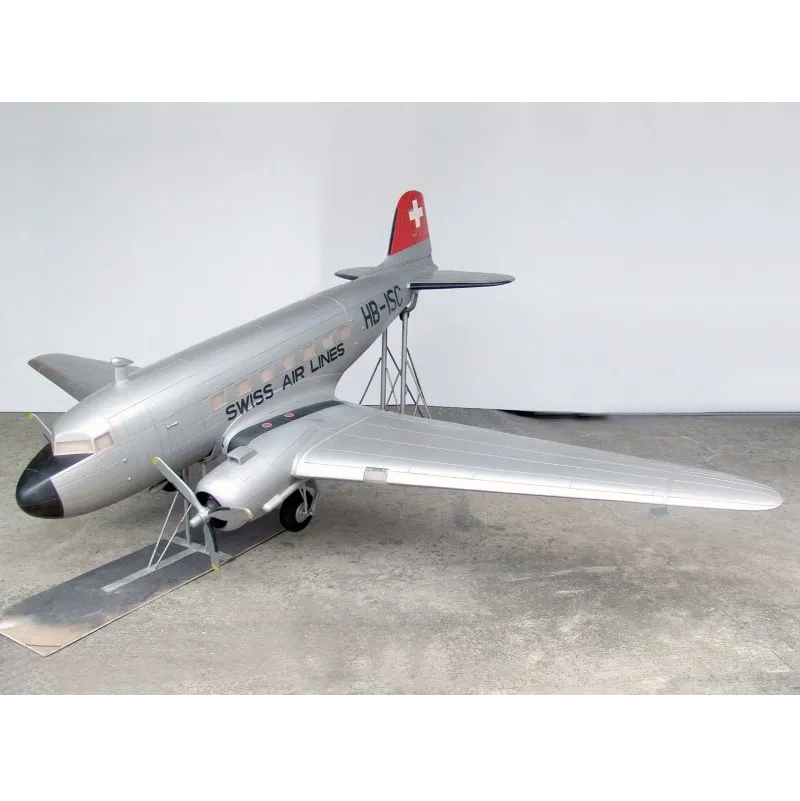 Photo: Douglas DC-3, via thepropcentral.com
Passengers received no safety briefings, wore no seatbelts, and had no idea what to do in emergencies. The concept of "cabin pressurization" didn't exist — flights above 10,000 feet meant passengers might experience altitude sickness.
When Crashes Were Just Part of Flying
The statistics from aviation's early era are sobering. Between 1938 and 1941, scheduled U.S. airlines averaged more than one fatal accident per month. Passengers died in crashes caused by pilot error, mechanical failure, weather, and simple bad luck.
Consider the December 1935 crash of United Airlines Flight 4: a Boeing 247 flying from Newark to Cleveland simply disappeared in bad weather over Pennsylvania. No radio contact, no distress signal, no survivors. Investigators eventually found wreckage scattered across a mountainside, but never determined exactly what went wrong.
Such mysteries were common because planes lacked the "black boxes" that record flight data and cockpit conversations. When crashes occurred, investigators often had little evidence beyond scattered debris and witness accounts.
The Regulatory Revolution
The transformation began with the Civil Aeronautics Act of 1938, which created federal oversight of commercial aviation. But real change came slowly, driven by disasters that forced the industry to confront its safety problems.
The 1956 Grand Canyon mid-air collision between TWA and United flights — killing all 128 people aboard both planes — led to the creation of the Federal Aviation Administration in 1958. Suddenly, someone was actively managing American airspace instead of just hoping planes wouldn't hit each other.
The 1960s and 70s brought systematic safety improvements: mandatory pilot training programs, standardized procedures, improved weather forecasting, and better aircraft design. Each major accident triggered new regulations and safety requirements.
The Science of Not Crashing
Modern aviation safety is built on layers of protection that early passengers couldn't have imagined. Today's airline pilots undergo years of training and regular recertification. They practice emergency scenarios in sophisticated simulators that recreate every possible failure mode.
Aircraft themselves are engineering marvels designed with multiple backup systems. Modern jets can lose an engine and still fly safely. They can land automatically in zero visibility. They're struck by lightning regularly without incident because they're designed to handle it.
Air traffic control has evolved from guys with binoculars watching for planes to a sophisticated radar network that tracks every aircraft in American airspace. Controllers know exactly where every plane is, where it's going, and how fast it's traveling.
The Numbers Don't Lie
Today's safety record would seem impossible to 1930s aviators. The chance of dying in a commercial airline crash is roughly one in 45 million — lower than being struck by lightning twice. You could fly every day for 123,000 years before probability suggests you'd experience a fatal crash.
Modern jets are so safe that you're statistically more likely to die driving to the airport than flying to your destination. The most dangerous part of air travel today is the car ride to catch your flight.
This safety record isn't accidental. It's the result of systematic learning from every accident, near-miss, and mechanical failure. The aviation industry has created a culture where reporting problems is encouraged and safety improvements are constantly implemented.
The Cost of Perfection
This transformation came with trade-offs. Early aviation was dangerous but also adventurous and accessible. Flying felt like genuine exploration, and pilots were folk heroes who pushed boundaries.
Modern aviation is incredibly safe but also highly regulated and expensive. The extensive training, multiple backup systems, and constant oversight that make flying safe also make it costly. Many small airports that once offered regular service can no longer support commercial flights.
The sense of adventure has largely disappeared. Flying has become routine transportation rather than daring exploration — which is exactly what safety engineers intended.
Lessons Beyond Aviation
Aviation's safety transformation offers lessons for other industries grappling with risk. The key wasn't just better technology — though that helped enormously. It was creating systems that learned from failures, standardized best practices, and prioritized safety over convenience or cost.
The industry also embraced transparency about problems rather than hiding them. Modern aviation safety depends on pilots, mechanics, and air traffic controllers reporting issues without fear of punishment.
The Miracle of Ordinary Flying
Today's passengers board planes with the casual confidence that would have amazed their grandparents. We complain about delayed flights and cramped seats while taking for granted that we'll arrive safely at destinations that once required weeks of dangerous travel.
This transformation — from death-defying gamble to routine transportation — represents one of humanity's greatest safety achievements. We've essentially solved the problem of how to move people through the air without killing them, turning one of the most dangerous activities imaginable into the safest form of travel ever invented.
The next time you're annoyed by airport security or flight delays, remember Knute Rockne and the thousands of early aviation passengers who died so we could learn how to fly safely. Today's inconveniences are the price of yesterday's hard-won lessons.