The Forgotten Room That Made American Dinner Parties Possible
Walk through any modern American home, and you'll find kitchens that flow seamlessly into living areas, designed for casual interaction and open-plan living. But for most of our nation's history, the kitchen was hidden away like a dirty secret, connected to the dining room by a small, efficient workspace that most Americans have never heard of: the butler's pantry.
This forgotten room was the nerve center of American entertaining, a staging area where elaborate meals were orchestrated with military precision. Its disappearance tells the story of how we fundamentally reimagined not just our homes, but our entire relationship with food, hospitality, and domestic life.
The Command Center of Civilized Dining
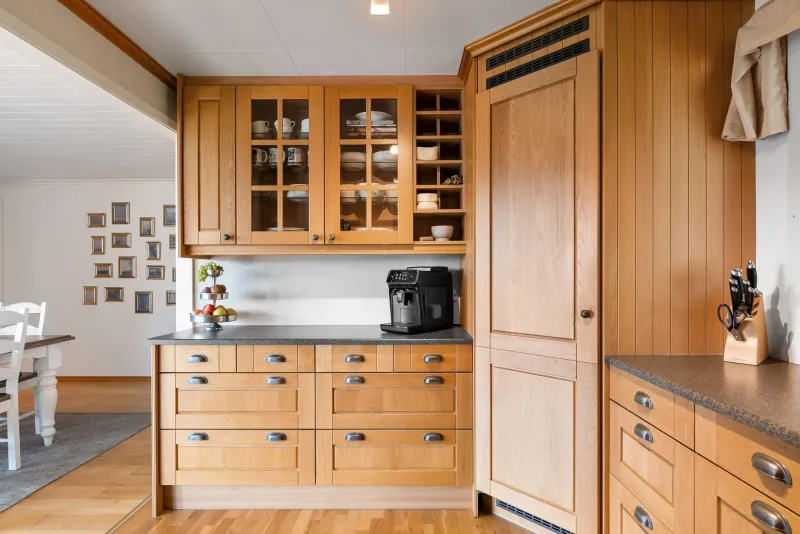
The butler's pantry occupied the crucial space between kitchen and dining room, typically measuring 6 by 10 feet and packed with purpose-built storage. Glass-front cabinets displayed fine china and crystal, while drawers held silver flatware and linens. A small sink allowed for last-minute washing of delicate items, and counter space provided room for final food preparation and plating.
But this wasn't just storage — it was a staging area for performance. In the era of formal dining, meals weren't simply cooked and served; they were choreographed productions that required precise timing, proper presentation, and seamless execution.
Consider a typical dinner party in 1920s America. The kitchen, often located in the basement or back of the house, was where the actual cooking happened — hot, messy work that polite society preferred to keep invisible. The butler's pantry served as the transformation zone where this kitchen chaos was converted into dining room elegance.
Servants (or the lady of the house, if the family couldn't afford help) would use the pantry to arrange food on proper serving dishes, organize courses in the correct sequence, and ensure that everything appeared in the dining room at the perfect temperature and presentation. It was quality control for hospitality.
The Theater of American Hospitality
The butler's pantry existed because American dining was fundamentally different from today's casual approach. Meals followed strict protocols: multiple courses served in precise order, specific utensils for each dish, and elaborate table settings that required extensive preparation and coordination.
A formal dinner might include seven or eight courses, each requiring different serving pieces, appropriate wines, and careful timing. The pantry allowed hosts to manage this complexity without exposing guests to the behind-the-scenes work that made it possible.
Even middle-class families without actual butlers used these rooms to elevate their entertaining. A housewife could retreat to the pantry between courses, adjust her appearance, arrange the next round of dishes, and return to the dining room as the gracious hostess rather than the harried cook.
The room also served as a buffer zone that protected the social performance of dining from the industrial reality of food preparation. Guests never saw dirty pots, food scraps, or the controlled chaos of meal production — only the polished final result.
When Every Home Was a Restaurant
The prevalence of butler's pantries reflected an era when entertaining at home was far more elaborate than most modern Americans can imagine. Before restaurants became accessible to the middle class, and long before takeout and catering made hosting effortless, families who wanted to impress had to create restaurant-quality experiences in their own homes.
This meant not just cooking complex meals, but managing service, presentation, and atmosphere with professional-level attention to detail. The butler's pantry was the backstage area that made this domestic theater possible.
Architectural plans from the 1890s through 1940s show butler's pantries as standard features in middle-class and upper-class homes. Real estate advertisements touted them as selling points, and home design magazines provided detailed guidance on their proper layout and use.
The rooms were so essential to proper entertaining that many families prioritized them over other amenities. A house might have small bedrooms or a modest living room, but a well-designed butler's pantry was considered non-negotiable for anyone with social aspirations.
The Revolution That Killed the Pantry
The decline of the butler's pantry began in the 1950s and accelerated through the following decades, driven by several converging social and technological changes that fundamentally altered American domestic life.
First, the rise of casual dining made elaborate meal service seem stuffy and outdated. Families began eating in kitchens rather than formal dining rooms, and the rigid protocols that required careful staging started to feel unnecessarily complicated.
Second, the servant shortage following World War II meant that middle-class families could no longer rely on domestic help to manage complex entertaining. The butler's pantry became a reminder of a lifestyle that was no longer practical or affordable.
Most importantly, the open-plan revolution of the 1960s and 1970s completely reimagined the relationship between cooking and socializing. Instead of hiding food preparation, architects began celebrating it, creating kitchen-centered homes where cooking became a social activity rather than hidden labor.
The Open Kitchen Revolution
The shift from butler's pantries to open kitchens represents one of the most dramatic changes in American domestic architecture. Where once we went to great lengths to separate cooking from entertaining, we now design homes that make the kitchen the social center of the house.
This transformation reflected changing attitudes about gender roles, domestic labor, and the nature of hospitality itself. The hidden kitchen and butler's pantry system assumed that food preparation was work to be concealed, while open kitchens celebrate cooking as a form of entertainment and social bonding.
Modern kitchen islands serve some of the same functions as butler's pantries — providing staging space and storage — but they do so in full view of guests, fundamentally changing the social dynamics of home entertaining.
What We Lost and Gained
The disappearance of the butler's pantry reflects broader changes in how Americans live, work, and socialize. We gained casualness, authenticity, and more democratic forms of entertaining that don't require extensive preparation or formal protocols.
But we also lost something: the ability to create truly special occasions through elaborate presentation and careful staging. The butler's pantry era produced forms of hospitality that were more theatrical, more formal, and arguably more memorable than our current casual approach.
Today's dinner parties, while warmer and more inclusive, rarely achieve the sense of occasion that characterized entertaining when every meal was a carefully orchestrated performance. The butler's pantry didn't just store dishes — it stored the tools and space necessary for domestic magic.
The next time you effortlessly flow between your kitchen and living room during a dinner party, remember the small, forgotten room that once made American entertaining possible. Its absence tells the story of how we chose convenience and casualness over formality and theater — a trade-off that says as much about our values as it does about our architecture.