The Killer in the Tap: How Americans Drank Disease for Generations Before Someone Fixed the Water

Photo by Photo by Bergen Public Library on Unsplash on Unsplash
Turn on a faucet in almost any American home today and water flows out that has been filtered, treated, tested, and monitored to standards that would have seemed like science fiction a hundred and fifty years ago. Most of us don't think about it at all. We fill a glass, drink it, and move on.
For the vast majority of American history, that casual confidence would have been a death wish.
Water killed Americans. Not occasionally, not in isolated accidents, but systematically and relentlessly, year after year, in cities and towns across the country. The pathogens in drinking water — typhoid, cholera, dysentery, hepatitis A — were so embedded in ordinary life that periodic epidemics were treated less as emergencies than as grim seasonal inevitabilities, like bad winters or poor harvests. People got sick. People died. The water kept flowing.
The River Was Also the Sewer
To understand how bad the problem was, you have to understand how American cities handled waste in the 19th century. The answer, bluntly, is that they mostly didn't.
Urban populations grew explosively after the Civil War. New York, Chicago, Philadelphia, and Boston swelled with immigrants and rural migrants, building density faster than any infrastructure could keep pace with. Human waste went into privies, cesspools, and — increasingly — into the same rivers and lakes that supplied the city's drinking water. In many cities, the intake pipe for the water supply and the outlet pipe for the sewage system were located within miles of each other on the same body of water.
Chicago's situation was almost comically horrific. The city drew its drinking water from Lake Michigan and discharged its sewage into the Chicago River, which flowed into the lake. The solution, implemented in the 1900s, was to reverse the Chicago River's flow — a genuine feat of engineering — to push waste away from the lake. But even that fix didn't address what was already in the water supply.
 Photo: Lake Michigan, via farm3.staticflickr.com
Typhoid fever was the most visible consequence. Caused by Salmonella typhi bacteria transmitted through contaminated water and food, typhoid produced weeks of agonizing fever, intestinal hemorrhaging, and a mortality rate that could reach 10 to 20 percent of those infected. In the 1890s, American cities recorded typhoid death rates of 30 to 100 deaths per 100,000 people per year — numbers that today would trigger a national emergency. Then, they triggered a shrug.
The Cholera Waves That Changed Nothing
Cholera was even more dramatic in its devastation. The disease, which spreads almost exclusively through fecal contamination of water, killed with terrifying speed — a healthy person could be dead within hours of developing symptoms. Cholera pandemics swept through American cities in 1832, 1849, 1866, and 1892, each time killing thousands and sending survivors fleeing into the countryside.
The 1849 epidemic killed over 5,000 people in New York City alone. The 1866 outbreak killed more than 1,100 in a single month in the same city. These were not small towns with primitive resources. New York in 1866 was one of the most economically powerful cities on Earth. It just had no reliable way to keep human waste out of its drinking water.
The tragedy is that the science was available. John Snow, a London physician, had famously traced a cholera outbreak to a contaminated water pump on Broad Street in 1854, demonstrating conclusively that the disease spread through water rather than air. His work was widely reported. American public health officials were aware of it. And yet the structural changes required to act on that knowledge — new sewage systems, new water treatment facilities, new regulations — moved at the pace of politics and public will, which is to say, very slowly.
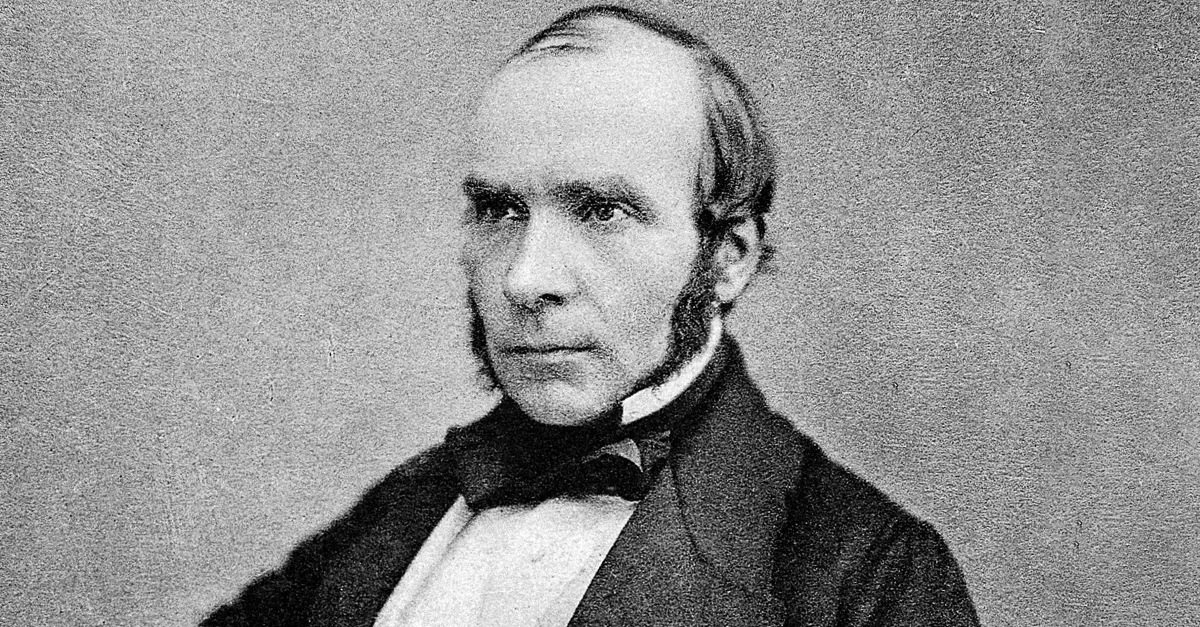 Photo: John Snow, via www.factinate.com
The Moment the Chemistry Changed Everything
The breakthrough came not from a dramatic political battle or a celebrated scientist's eureka moment, but from a quiet experiment in a small New Jersey city.
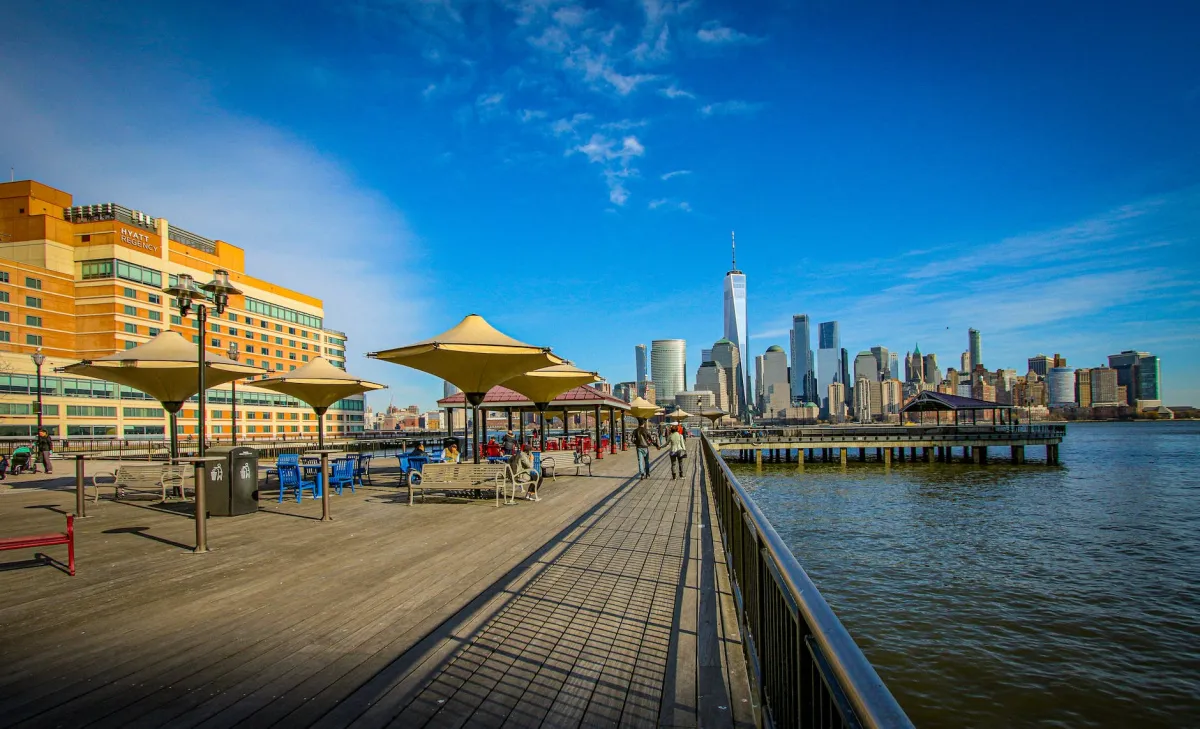 Photo: Jersey City, via sunnysweetdays.com
In 1908, Jersey City became the first municipality in the United States to implement continuous chlorination of a public water supply. The Boonton Reservoir, which served the city, began receiving carefully controlled doses of chlorine — a chemical known to kill the bacteria responsible for typhoid and cholera. The results were almost immediate. Typhoid rates in Jersey City collapsed.
The experiment attracted attention. Dr. John Leal, the physician who had championed the chlorination program, and George Warren Fuller, the engineer who designed it, faced fierce opposition from residents convinced they were being poisoned. A lawsuit was filed challenging the right of the water company to add chemicals to the public supply without consent. In 1910, after reviewing the evidence, a New Jersey court ruled in favor of chlorination, establishing a legal precedent that would echo across the country.
City after city adopted chlorination over the following decade. Combined with improved filtration systems — sand filtration had been gaining adoption since the 1890s — the effect on public health was staggering. Between 1900 and 1940, typhoid mortality in the United States fell by more than 90 percent. Tens of thousands of lives were saved every single year. The Centers for Disease Control later called water chlorination one of the ten great public health achievements of the 20th century.
Clean Water Wasn't Free, and It Wasn't Equal
The story of American water safety has a shadow that deserves acknowledgment. Clean water arrived unevenly. Rural communities, particularly in the South and in poor regions generally, often lacked access to treated municipal supplies well into the mid-20th century. Waterborne disease remained a significant killer in those communities long after it had been largely eliminated in wealthy urban centers.
And the struggle isn't purely historical. The Flint, Michigan water crisis — which began in 2014 and exposed thousands of children to lead-contaminated water after a cost-cutting decision by state officials — was a brutal reminder that safe water is not a permanently solved problem. It requires constant investment, vigilant oversight, and political will. When those things fail, the consequences follow with the same grim logic they always have.
What's in Your Glass
The EPA now sets legal limits for over 90 contaminants in public water systems. Municipal water utilities test their supplies constantly, often thousands of times per month. Treatment systems layer multiple barriers — filtration, chlorination or chloramination, UV treatment in many systems — to catch what any single method might miss.
The result is water that, in most American communities, is safer than bottled water, which faces less rigorous federal oversight than tap water does. The irony of a country that spent a century dying from its tap water now spending billions of dollars annually on bottled water out of distrust of the tap is not lost on public health researchers.
But the baseline has shifted so dramatically that it's easy to forget what the baseline used to be. Families in 19th-century Cincinnati or Baltimore weren't careless or ignorant. They were drinking the only water available, doing their best in a world where the invisible biology of contamination was poorly understood and the engineering solutions didn't yet exist.
The water in your glass tonight is the product of more than a century of scientific discovery, engineering ambition, legal battles, and public health advocacy. It arrived clean because a lot of people fought to make it that way — and because enough people died to make the fight impossible to ignore.