Before Fingerprints, America Had No Reliable Way to Know Who You Were Talking To

Photo by Photo by Immo Wegmann on Unsplash on Unsplash
In the 1880s, a man named Will West arrived at Leavenworth Federal Penitentiary in Kansas to begin a prison sentence. When he was processed, guards pulled out his file and told him there must be some mistake — they already had a William West in their records. Same name, nearly identical physical measurements, almost identical photograph. The two men were not related. They just looked remarkably alike.
 Photo: Leavenworth Federal Penitentiary, via www.visitleavenworthks.com
The near-catastrophic confusion that followed helped expose a fundamental problem with how America identified criminals — and ultimately helped launch a forensic revolution that would reshape the entire justice system.
The Body Measurement Era
Before fingerprinting became standard practice, law enforcement relied on a system called Bertillonage — named after French criminologist Alphonse Bertillon — which attempted to identify repeat offenders by precisely measuring their bodies. Skull circumference, forearm length, foot size, ear dimensions: the theory was that no two people shared the exact same combination of measurements, making the system a reliable way to track criminals across multiple arrests.
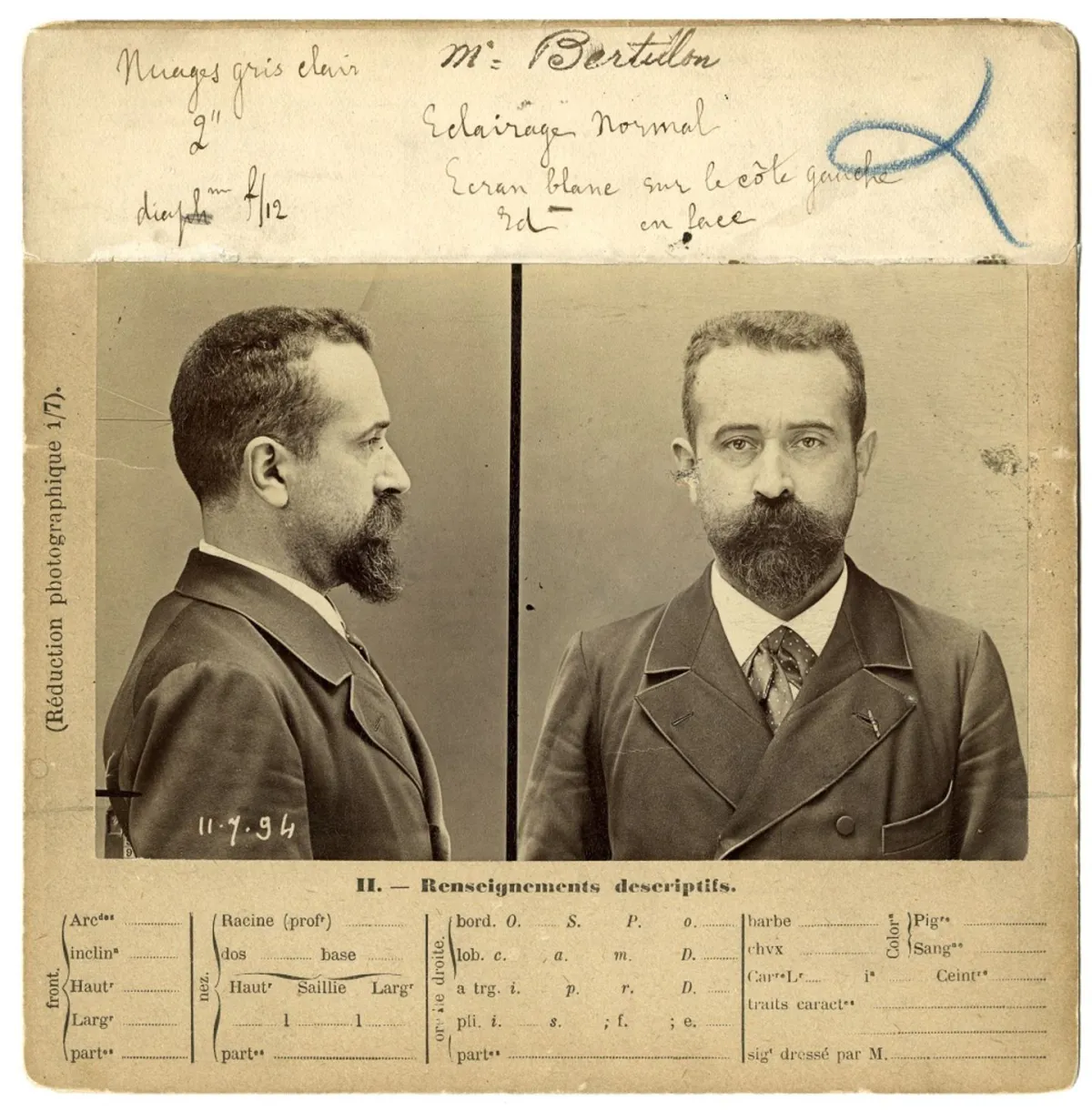 Photo: Alphonse Bertillon, via image.geo.de
American prisons and police departments adopted Bertillonage enthusiastically in the 1880s. It felt scientific. It felt modern. And compared to what came before — which was essentially just asking whether anyone recognized the suspect — it was a genuine step forward.
But the Will West case tore the system apart. Both men had nearly identical Bertillon measurements. If the prison had relied solely on that method, it would have been nearly impossible to distinguish them in any official record. The incident became a famous argument for a different approach — one that had actually been quietly developing for years in Britain and India, where colonial administrators had been using a simple, elegant identification system based on the ridges of the human fingertip.
The Fingerprint Revolution
The science behind fingerprinting wasn't new. Researchers had been studying ridge patterns on fingertips since the 1820s, and by the 1880s, Francis Galton in England had published detailed work confirming that no two people share the same fingerprint pattern — and that those patterns remain unchanged throughout a person's life.
What took time was convincing law enforcement to actually use the technology. The New York City Civil Service Commission began fingerprinting employees in 1901. The FBI established its Identification Division in 1924, eventually building a central repository of fingerprint records that would grow into the largest such database in the world.
For American law enforcement, the practical implications were enormous. For the first time, a criminal who gave a false name at arrest could be definitively linked to prior convictions. Repeat offenders who had slipped through the system under aliases suddenly had nowhere to hide. And crime scenes that previously yielded nothing began offering investigators something they had never had before: a biological signature left behind by the perpetrator.
Courtrooms changed too. Fingerprint evidence, once judges and juries accepted its scientific validity, became some of the most powerful testimony an investigator could offer. The standard of what counted as proof shifted dramatically.
The Long Struggle With Human Error
But fingerprinting wasn't perfect — and it took decades for the justice system to fully reckon with that fact. Matching prints from a crime scene to a suspect still required human examiners making judgment calls, and those calls were sometimes wrong in catastrophic ways.
The case of Brandon Garner in the early 2000s illustrated this painfully. Fingerprint examiners — including FBI analysts — incorrectly matched prints from the 2004 Madrid train bombing to an Oregon attorney named Brandon Mayfield, who was arrested and held for two weeks before Spanish authorities identified the actual suspect. The FBI's examiners had been so confident they were right that they dismissed contradictory evidence. It was a public embarrassment that forced serious re-examination of how fingerprint analysis was conducted and validated.
DNA and the New Definition of Certainty
If fingerprinting was a revolution, DNA profiling was something closer to a reckoning. When British geneticist Alec Jeffreys developed DNA fingerprinting in 1984, and American labs began adopting the technique through the late 1980s and 1990s, law enforcement gained something unprecedented: a form of biological identification so precise it could theoretically distinguish between any two humans on Earth — with the exception of identical twins.
The FBI launched CODIS — the Combined DNA Index System — in 1998, creating a national database that now contains DNA profiles from tens of millions of individuals. Cold cases that had sat unsolved for decades suddenly had new life. And in a development that stunned many Americans, the same technology that put people in prison began taking them out.
The Innocence Project, founded in 1992, has used post-conviction DNA testing to exonerate more than 200 people who were wrongfully convicted — many of whom had spent decades behind bars, some on death row. The evidence that put them away often included eyewitness testimony, which we now know is far less reliable than courts once assumed, or forensic methods that lacked the scientific rigor they were presented as having.
Where We Are Now
Today, American law enforcement has access to tools that would have seemed like science fiction a generation ago. Facial recognition software can scan surveillance footage and match faces against databases in seconds. Genealogical DNA databases — the same ones people use to find long-lost cousins — have been used to identify suspects in cold cases going back decades, most famously in the capture of the Golden State Killer in 2018.
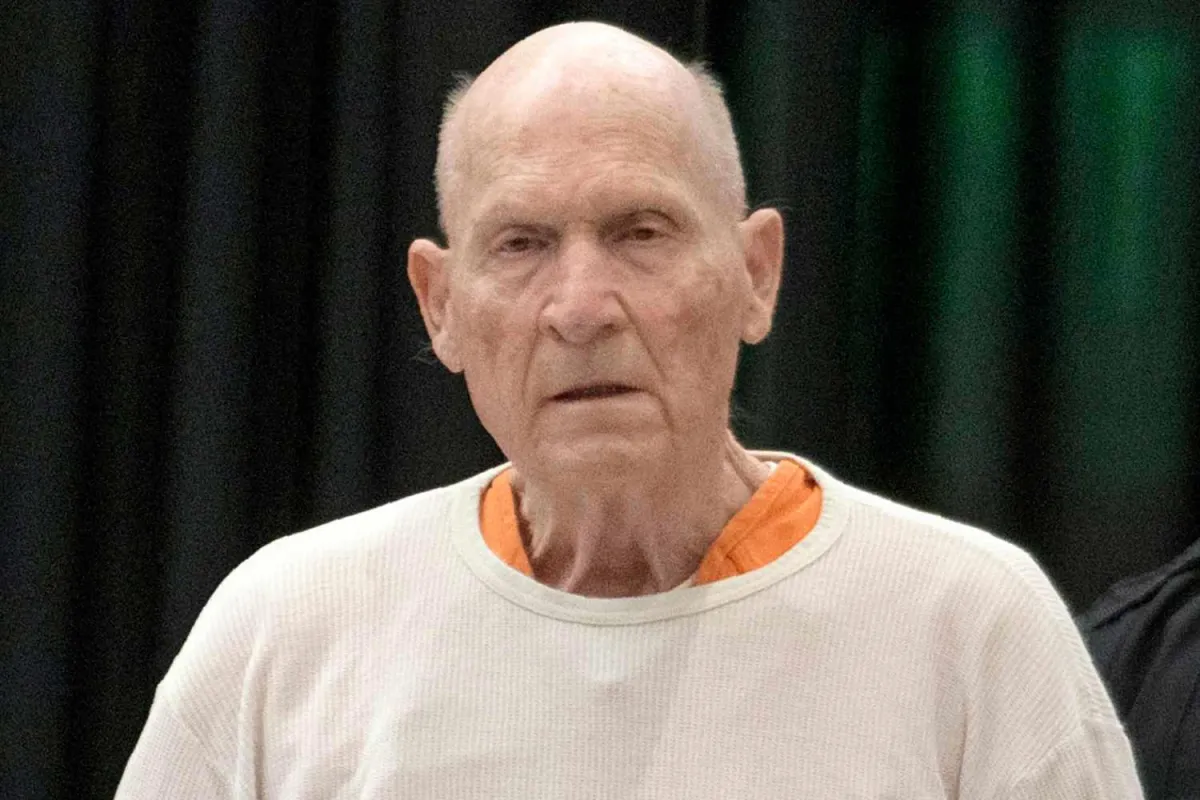 Photo: Golden State Killer, via img-s-msn-com.akamaized.net
Biometric identification has moved far beyond law enforcement too. Your phone unlocks when it sees your face. Your fingerprint authorizes your bank transactions. The same science that once struggled to tell two prisoners apart now processes millions of identity verifications every single day without anyone thinking twice.
The Will West confusion at Leavenworth happened less than 140 years ago. The distance traveled since then — in science, in law, and in what we expect the justice system to be able to prove — is staggering. We didn't just get better tools. We fundamentally changed what we mean when we say we know who someone is.