America's Daily Dance With Spoiled Food: How Ice Wagons and Warm Milk Ruled the Kitchen
America's Daily Dance With Spoiled Food: How Ice Wagons and Warm Milk Ruled the Kitchen
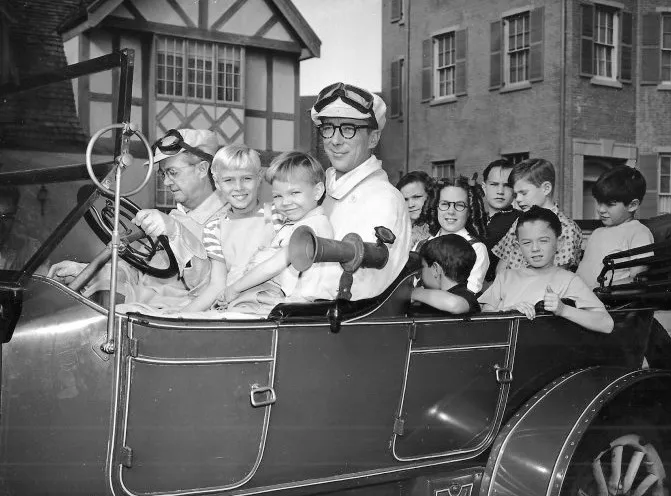
Every morning at 6 AM sharp, the milkman would clatter down Main Street America, leaving glass bottles on doorsteps while families still slept. By noon, that same milk could kill you.
 Photo: Main Street America, via musicalsontour.co.uk
This wasn't some distant historical quirk — as recently as the 1940s, most American families lived in a daily race against bacterial time bombs. Without electric refrigeration, keeping food safe wasn't a convenience issue. It was a matter of life and death.
The Ice Age of American Kitchens
Before the refrigerator revolution, American households depended on iceboxes — wooden cabinets lined with zinc or porcelain, chilled by massive blocks of ice that melted faster than you'd think. The iceman became as essential as the mailman, hauling 25-pound blocks up three flights of stairs twice a week.
But here's what nobody tells you about those "simpler times": ice was expensive, unreliable, and completely inadequate for food safety. A typical icebox maintained temperatures between 45-50°F on a good day. Modern food safety standards require 40°F or below. That gap might seem trivial, but it was the difference between safe milk and a trip to the hospital.
Milk deliveries happened daily because they had to. Glass bottles left on porches in summer heat would sour within hours. Smart housewives knew to bring them inside immediately, but even then, you had maybe 12 hours before the milk turned into a science experiment.
When Dinner Could Be Your Last Meal
Foodborne illness wasn't an occasional inconvenience — it was a constant threat that shaped every aspect of American cooking. Families planned meals around what they could consume immediately. Leftovers were a luxury few could afford, literally.
Meat spoiled so quickly that butchers often sold it the same day they slaughtered animals. Fish markets opened before dawn and closed by noon, not by choice but by necessity. Vegetables lasted slightly longer, but without refrigerated transport, fresh produce was seasonal and local by default.
The statistics are staggering. In 1900, foodborne illness killed more Americans than tuberculosis. Infant mortality rates plummeted in cities that first adopted refrigerated milk distribution — not because of better medicine, but because babies stopped drinking spoiled milk.
The Quiet Revolution That Changed Everything
Electric refrigeration didn't arrive with fanfare. General Electric introduced the first hermetically sealed refrigerator in 1918, but it cost $714 — roughly $10,000 in today's money. Only the wealthy could afford this luxury that we now consider essential.
 Photo: General Electric, via www.worldmap1.com
The real transformation came after World War II. Mass production drove prices down, and returning GIs used their benefits to buy homes equipped with modern appliances. By 1950, nearly 90% of American homes had electric refrigerators. The change happened so fast that an entire generation grew up never knowing the daily anxiety of food spoilage.
What We Gained (And Lost)
Refrigeration didn't just preserve food — it rewrote American culture. Families could shop weekly instead of daily. Women spent less time planning meals around spoilage schedules. The corner grocery store, once essential for daily fresh purchases, began its slow decline toward extinction.
Food became safer, but also more processed. When milk lasted a week instead of a day, dairy companies could pasteurize, homogenize, and ship from industrial facilities hundreds of miles away. The local dairy farmer, like the iceman, became obsolete overnight.
Restaurants could store ingredients longer, leading to more complex menus but also more standardized food. The farm-to-table movement exists partly because refrigeration allowed us to forget what truly fresh food tastes like.
The Hidden Health Revolution
Doctors of the 1920s spent enormous amounts of time treating food poisoning, dysentery, and milk-borne diseases that virtually disappeared by 1960. Emergency rooms saw fewer cases of severe dehydration from spoiled food. Child mortality rates dropped dramatically in areas where refrigerated food distribution became standard.
This wasn't just about comfort — it was about survival. Refrigeration ranks among the most important public health advances in American history, yet it's so ubiquitous that we've forgotten how dangerous life was without it.
The Temperature That Changed America
Today, we worry about power outages that might spoil a week's worth of groceries. Our great-grandparents worried about breakfast milk killing the baby before lunch. The difference between 50°F and 35°F — barely noticeable to human touch — represented the gap between constant vigilance and peaceful sleep.
Refrigeration didn't just preserve food. It preserved families, freed women from daily shopping marathons, and made the modern American lifestyle possible. Every time you grab milk that's been sitting in your fridge for three days, you're benefiting from a revolution that transformed not just kitchens, but the entire rhythm of American life.
The next time your refrigerator hums to life, remember: that sound is the echo of millions of Americans who no longer have to choose between fresh food and staying alive.