The Woman at the Switchboard Heard Everything — and Nobody Seemed to Mind
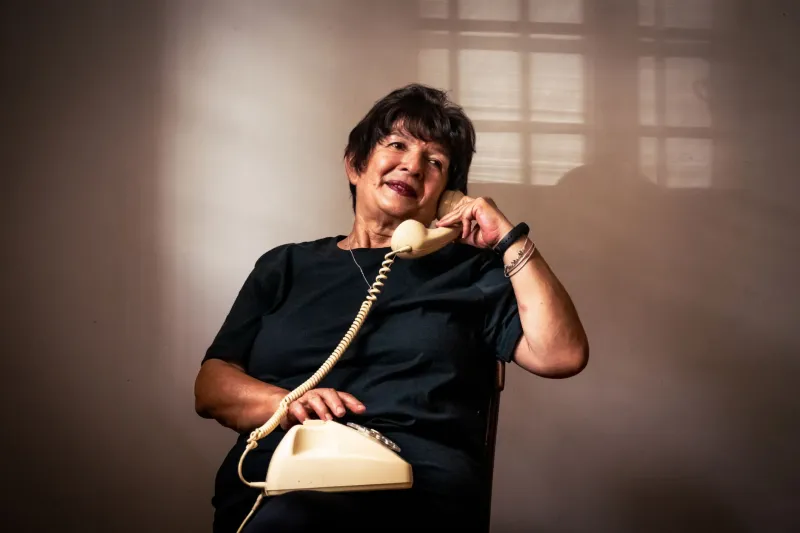
Somewhere in small-town Ohio in 1935, a woman sits at a wooden switchboard, headset on, plugging cables into rows of jacks with practiced efficiency. The calls come in fast — the hardware store calling the lumber yard, a wife trying to reach her husband at the office, the doctor calling ahead to a patient's house. She connects them all. She also, unavoidably, knows all of them.
This was the American telephone system for the better part of six decades. Every call manually routed by a human being. Every connection made by someone who could hear you pick up, who knew your voice, and who often knew your business before you'd said a word.
Today, we have lengthy debates about whether tech companies are listening to our conversations. We install VPNs, read privacy policies, and worry about data brokers. But for most of the telephone era, the most intimate surveillance infrastructure imaginable was just... the phone company. And Americans accepted it the way they accepted the weather.
The Operator as the Center of Everything
When Alexander Graham Bell's invention went commercial in the 1880s, nobody had quite figured out how to scale it. The first telephone exchanges used teenage boys as operators — a choice that was quickly abandoned because they were, by most accounts, rude and chaotic. Women took over the role almost immediately and dominated it for decades.
By the early 1900s, telephone operators were a fixture of American life, particularly in smaller cities and rural areas. In a town of a few thousand people, the operator at the local exchange often knew every subscriber by voice. She knew which families called each other regularly, which businesses were struggling because their call volume had dropped, and which marriages were rocky because a husband kept calling a number that wasn't his home.
This wasn't paranoia or speculation — it was the structural reality of how the system worked. Operators had to log calls for billing purposes. They were trained to monitor line quality. And in many exchanges, particularly smaller ones, there was no physical barrier between connecting a call and overhearing its opening moments.
Small-town operators became informal information hubs. If you needed to reach someone and didn't know their number, you asked the operator. If there was an emergency and you needed to find the doctor fast, the operator knew where he was. During floods, fires, and other crises, the local telephone exchange often became a de facto emergency coordination center — because the operator already knew everything.
What People Actually Thought About This
Here's the part that's hardest to fully absorb from a modern vantage point: most people didn't consider this a privacy violation. It was simply how the telephone worked.
There were occasional complaints. Gossip spread through operators in small towns was a recurring social grievance. Businesses sometimes suspected that competitors were getting information through telephone company employees. And the telephone companies themselves developed codes of conduct and employee guidelines specifically around confidentiality — which implicitly acknowledged that the problem was real.
But there was no mass protest, no legislative push to restructure the system around privacy. The idea that your communications were fundamentally yours — private by default, accessible only with your explicit consent — hadn't yet crystallized as a cultural expectation. Communication had always involved intermediaries. Letters passed through postal workers. Telegrams were transcribed by operators. The telephone was just the latest version of that.
In a strange way, the intimacy of small-town operator culture also generated a kind of social trust. The operator who knew your business also lived in your community, went to your church, and had her own reputation to protect. Discretion was a professional and personal expectation. The surveillance was human-scale.
The Machine That Erased the Middleman
The automated dial system — which allowed callers to connect directly without going through an operator — had existed in limited form since the 1890s, but it spread slowly and unevenly across the country. The Bell System's gradual rollout of direct dialing accelerated through the 1940s and 50s, and by the 1960s, most American households could make local calls without ever speaking to an operator.
The transformation was sold largely on efficiency. Faster connections. No wait times. Calls at any hour without staffing costs. What it also delivered, though no one framed it this way at the time, was a new form of privacy. For the first time, you could make a phone call that no human being at the telephone company had directly witnessed.
Operators didn't disappear entirely — they shifted to handling long-distance calls, directory assistance, and emergencies. But the intimate, all-knowing local operator who recognized your voice and knew your patterns was gone from most of American life by the time the 1970s arrived.
The Irony That Followed
The automated telephone system gave Americans more communications privacy than they'd ever had. And then, gradually, technology began eroding it again — in ways that are structurally similar to the operator era but vastly larger in scale.
The telephone companies that replaced human operators with machines still kept records. Call logs, billing data, duration and frequency of contact — all of it documented, stored, and eventually accessible to law enforcement, marketers, and in some cases, foreign intelligence services. The Church Committee hearings in the 1970s revealed the extent to which the federal government had been using telephone records for surveillance. The NSA's metadata collection programs, revealed decades later, showed that the impulse never went away.
Today, the debate about communications privacy is louder than it's ever been. We argue about end-to-end encryption, government backdoors, and what tech companies are allowed to do with our data. These feel like modern problems born of modern technology.
But the woman at the switchboard in 1935 was already living inside a version of the same question. The difference is she knew your name, and you probably knew hers.