Laundry Day Used to Swallow the Whole Week: The Forgotten Labor Behind Getting Dressed in America
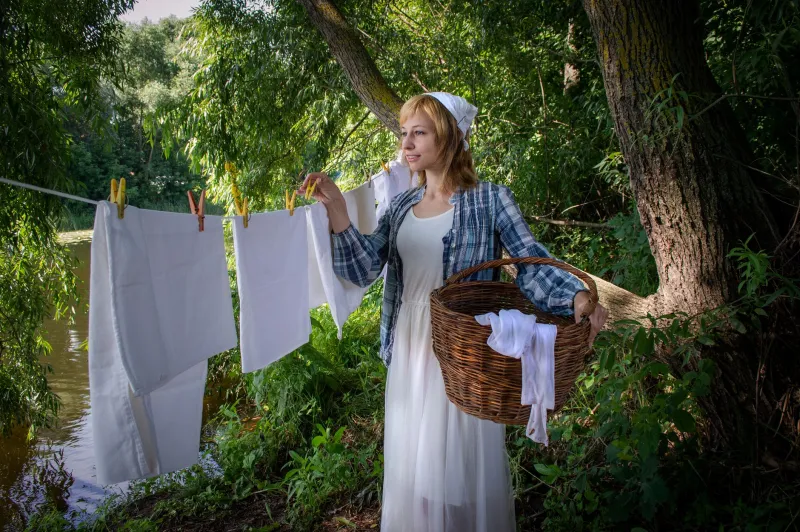
Monday was laundry day. Not because Monday had anything particularly special going for it, but because the work was so enormous that it needed to be scheduled — claimed like a territory — before the rest of the week had a chance to fill up. In households across America in the late 1800s and early 1900s, that single day of washing consumed more physical energy than almost any other domestic task. Women who did it described it in terms that sounded more like manual labor than housekeeping. Because it was.
Haul the water. Heat the water. Sort the clothes by fabric and color. Scrub each piece by hand on a washboard. Rinse. Wring. Hang. Repeat until the pile was gone, which could take until dark. And then Tuesday was ironing day, because almost nothing dried without becoming a wrinkled disaster.
The average American family today runs a load of laundry in about 45 minutes of active effort per week. The comparison is almost too extreme to take seriously — but it's real.
The Physics of Clean Clothes in 1900
To understand how hard laundry used to be, you have to understand what it actually involved. There were no faucets that delivered hot water on demand. Water had to be carried from a pump or well and heated on a wood or coal stove in large iron kettles. A full wash for a family of five might require heating thirty or forty gallons of water — each gallon weighing over eight pounds.
Once the water was hot, clothes were scrubbed against a corrugated washboard with lye soap, which was itself a caustic substance that cracked and burned skin with repeated exposure. Hands that spent Monday doing laundry looked like they'd been through something.
Wringing out wet fabric by hand or through a hand-cranked wringer mangle was exhausting work. Sheets and heavy woolen garments were particularly punishing. Everything then had to be hung to dry — outside in good weather, inside in winter, where it might take days to fully dry in a cold house.
Historians who have studied the time-use patterns of American women in this era estimate that laundry alone consumed somewhere between four and eight hours every single week. That's not total clothing care — that's just washing. Ironing, mending, and the hand-sewing required to maintain garments added considerably more.
Clothing Was Meant to Last, Because It Had To
One consequence of all this labor was that clothing was treated with an almost reverent seriousness that seems alien today. Americans in the nineteenth and early twentieth centuries owned far fewer garments than we do now, and they were expected to last for years — sometimes decades. Clothes were mended, patched, turned inside out when the outer fabric wore thin, and eventually repurposed as rags or quilting material when they could no longer serve their original function.
Nothing was disposable. A good dress shirt represented real money and real hours of maintenance. Wearing it carelessly, getting it stained, or failing to mend a small tear before it became a large one was a form of wastefulness that carried genuine social stigma.
Children's clothing was often made at home, sized generously so it could be let out as the child grew, and then passed down through siblings before being handed off to neighbors or relatives. The idea of buying a $12 t-shirt and throwing it away after a season would have been incomprehensible — and offensive — to most American households before World War II.
The Machine That Changed Everything
Electric washing machines existed as early as the 1910s, but they were expensive and not widely adopted until the post-war boom of the late 1940s and 1950s. When they did arrive in American homes at scale, the effect was immediate and profound.
The sociologist Ruth Schwartz Cowan, in her landmark study of household technology, documented something surprising: early washing machines didn't simply reduce the time women spent on laundry. They also raised the expected standard of cleanliness, which partially offset the time savings. Clothes that had previously been worn several times between washes were now expected to be laundered after a single use. Sheets that had been changed weekly or less were now changed more frequently.
Still, the net effect was a dramatic reduction in labor. By the 1960s, laundry had transformed from a day-consuming physical ordeal into an intermittent background task. The dryer eliminated the hanging and folding of damp clothes. Synthetic and blended fabrics — nylon, polyester, permanent press cotton — reduced or eliminated the need for ironing. Detergents replaced the harsh lye soaps that had destroyed generations of women's hands.
Fast Fashion and the End of Clothing Permanence
The final shift came more recently, and it moved in an unexpected direction. As laundry became easier and cheaper, clothing itself became cheaper too — and more disposable. Fast fashion, pioneered by retailers like H&M and later Zara and Amazon, made it possible to buy a new outfit for less than a restaurant meal. The average American today buys roughly five times as many garments per year as they did in 1980.
The result is a strange inversion of the old relationship with clothing. We spend almost no time maintaining what we wear — but we buy and discard far more of it. The garments themselves have become almost irrelevant as objects of care. They're consumed, not tended to.
What the Hours Actually Meant
It's tempting to look back at the laundry-day era and feel only sympathy for the labor involved. But there's another dimension worth acknowledging: the enormous amount of unpaid, invisible work that kept American families clothed and presentable was almost entirely performed by women, with no economic recognition and little social credit.
The machines that freed households from that labor also, gradually, freed women from the identity of household laborer. The relationship between technological convenience and expanded opportunity isn't simple — but it's real. The hours that Monday used to swallow went somewhere, and a significant portion of them went into the workforce, into education, and into lives that looked quite different from what came before.
That's not a small thing. It's one of the quiet engines of twentieth-century American life, hiding in plain sight behind a washing machine.