Six Weeks in a Cast Was Getting Off Easy: The Brutal Reality of Broken Bones Before Modern Orthopedics
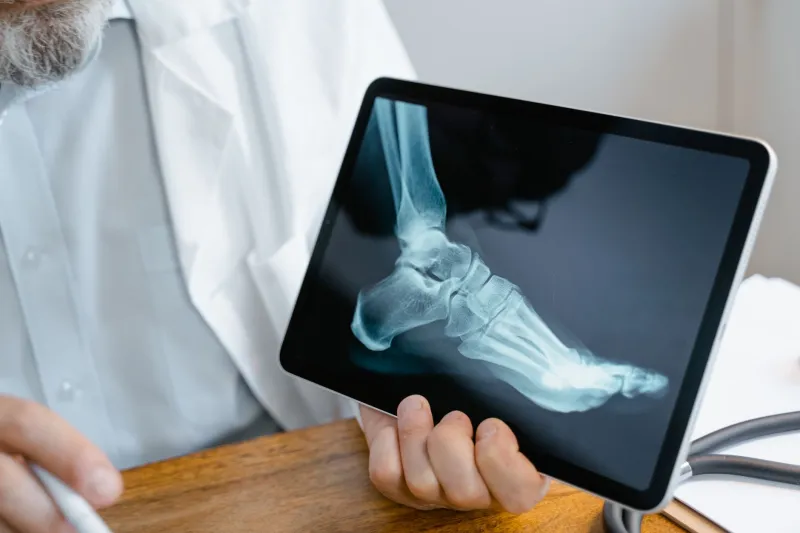
In 1920, if a factory worker in Pittsburgh broke his leg on the job, the prognosis was grim in ways that would shock anyone alive today. Weeks of complete bed rest. Months of immobilization. A high chance of the bone knitting back together crooked. And a realistic possibility that he'd never walk quite right again — if he was lucky enough to avoid the infection, the blood clot, or the pneumonia that often came next.
Fractures were not minor setbacks back then. They were life-altering events. For a working-class man, a serious break could mean permanent disability and financial ruin. For an older woman, a broken hip was practically a death sentence. And even for the relatively healthy and young, recovery was measured in seasons, not weeks.
The world has changed so dramatically on this front that it's almost hard to believe we're talking about the same injury.
When Rest Was the Only Tool in the Box
For most of American medical history, treating a fracture meant one thing: hold it still and hope for the best. Physicians would set bones by hand — often without anesthesia in earlier eras — wrap the limb in plaster, and instruct the patient to lie down and wait. That was essentially the entire treatment plan.
The problem was that immobilization, while necessary for healing, came with brutal side effects. Muscles atrophied rapidly. Joints stiffened. Blood pooled dangerously in the legs, creating clots that could travel to the lungs and kill. Patients confined to bed for months developed bedsores, respiratory infections, and a kind of whole-body deterioration that made the original injury look minor by comparison.
For complex fractures — ones where bone shattered into fragments, or broke through the skin — outcomes were even worse. Open fractures in the pre-antibiotic era were frequently fatal. Surgeons sometimes amputated limbs not because the break was irreparable, but because infection made amputation the only alternative to death. Civil War field hospitals were infamous for this calculus, but the same grim math persisted well into the early twentieth century.
Even when patients survived, the results were often disfiguring. Bones that healed with a slight angle meant limbs that were visibly shorter or bent. A bad break in childhood could affect posture and gait for life.
The Slow Revolution in Bone Medicine
Orthopedic surgery began evolving seriously in the mid-twentieth century, driven by a combination of wartime necessity and materials science. World War II pushed military surgeons to develop faster, more effective ways to treat complex fractures in the field. The introduction of metal rods, screws, and plates — collectively called internal fixation — allowed surgeons to hold shattered bones together from the inside, creating a stable framework that bone tissue could grow around.
This was genuinely revolutionary. Instead of waiting for a fracture to heal however it wanted inside a plaster shell, surgeons could now guide the process. Bones healed straighter, faster, and with far fewer complications.
Antibiotic medicine, advancing in parallel, removed the specter of infection that had made open fractures so deadly. Anesthesia improvements made longer, more precise surgeries possible. And by the 1970s and 1980s, rehabilitation science had matured enough to challenge the old assumption that rest was always the right answer. Controlled movement, it turned out, actually accelerated healing in many cases.
What Surgery Looks Like Now
Modern orthopedic care would be unrecognizable to a physician from 1940. Today, a patient who comes into an emergency room with a broken tibia will likely be evaluated with high-resolution imaging, have their fracture surgically repaired with titanium hardware, and be encouraged to bear weight on the limb within days — sometimes hours — of the procedure.
Same-day outpatient surgery for fractures that once required weeks of hospitalization is now routine. Minimally invasive techniques mean smaller incisions, less tissue damage, and dramatically reduced recovery times. Physical therapists work with patients almost immediately after surgery to prevent the muscle loss and joint stiffness that used to be inevitable.
The results at the elite level are particularly striking. Professional athletes — people whose bodies are their careers — routinely return from fractures that would have ended previous generations' livelihoods. NFL players come back from broken ankles in six weeks. Skiers return from shattered wrists before the season ends. The psychological framing has shifted entirely: a fracture is no longer a catastrophe. It's a problem to be solved on a timeline.
The Social Weight of a Broken Bone
It's easy to focus on the clinical improvements and miss the social transformation underneath them. A century ago, a serious fracture could collapse a family's finances. Workers had no paid sick leave, no disability safety net worth mentioning, and no guarantee their job would exist when they recovered. A broken leg wasn't just painful — it was economically terrifying.
For women managing households, the implications were different but equally serious. A mother laid up with a broken arm meant the household simply didn't function. There was no outsourcing the labor. No ordering dinner online. Someone else had to step in, or things fell apart.
Modern recovery, by contrast, is increasingly compatible with continued participation in life. Remote work, voice-controlled technology, scooters and mobility aids, and surgical outcomes that restore near-full function in weeks mean that even significant fractures don't necessarily remove people from their lives the way they once did.
Progress That Feels Invisible
We tend to celebrate the dramatic medical breakthroughs — the vaccines, the cancer treatments, the transplants. Orthopedic surgery rarely gets the same attention, maybe because broken bones feel mundane. Everybody's had one, or knows someone who has.
But the distance between a Civil War soldier having his leg amputated because of a femur fracture and a weekend runner having the same bone surgically repaired and returning to racing in three months is one of the most quietly astonishing gaps in the history of American medicine.
We didn't just get better at fixing bones. We fundamentally changed what it means to break one.