When Your Grocer Knew Your Kids' Names: The Death of America's Corner Store Economy
The Morning Ritual
Every Tuesday morning in 1948, Eleanor Kowalski would make her rounds through the Polish neighborhood of Hamtramck, Michigan, with a ritual as predictable as sunrise. First stop: Novak's Meat Market, where Stanley Novak would set aside the exact cut of pork shoulder Eleanor's family preferred, wrapped in white butcher paper and charged to her family's account with nothing more than a pencil notation in a worn ledger book.
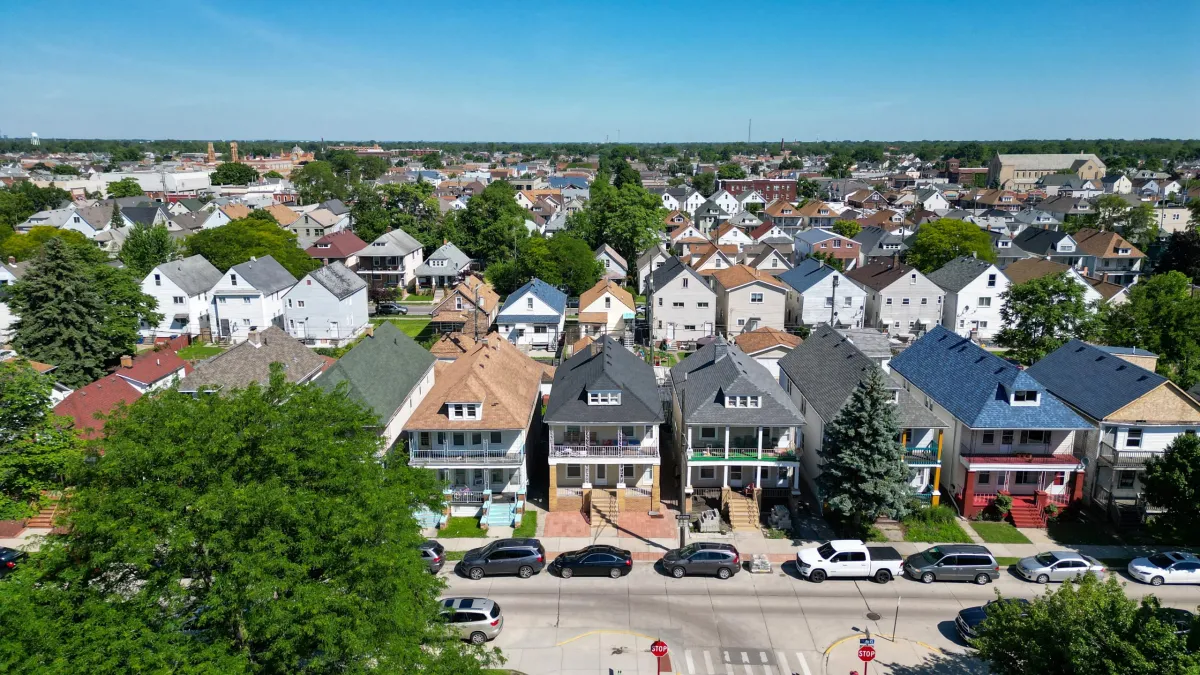 Photo: Hamtramck, Michigan, via hamtramckcity.gov
Next, she'd cross the street to Kowalczyk's Bakery, where the owner's wife would already have Eleanor's weekly order of rye bread cooling on the rack — two loaves, sliced thick, because she knew Eleanor's husband worked construction and needed substantial sandwiches. Finally, she'd stop at Wojcik's corner grocery, where old man Wojcik would tally up her bill, deduct her husband's weekly payment, and let Eleanor know if she needed to send young Tommy by with a few extra dollars.
This wasn't quaint small-town life — this was how most Americans bought food. In 1948, independent grocery stores accounted for nearly 85% of food sales. Your neighborhood grocer knew your name, your children's names, your financial situation, and exactly how you liked your meat cut.
The Ecosystem of Trust
America's food economy was built on relationships, not algorithms. The corner grocery store was more than a business — it was a financial institution, community center, and information hub rolled into one cramped storefront.
Credit was extended based on character, not credit scores. If Joe Kowalski lost his job at the Ford plant, Wojcik would carry his family's grocery bill for months without question, knowing that Joe was good for it once he found work. Children could be sent to the store with handwritten notes, and shopkeepers would assemble orders based on trust and long-standing relationships.
Each neighborhood had its specialized ecosystem: the butcher who knew exactly how each family liked their meat prepared, the baker who adjusted recipes based on customer preferences, the grocer who stocked specific brands because Mrs. Johnson's arthritis made certain jar lids too difficult to open. This wasn't inefficiency — it was hyper-personalized service that no modern algorithm has ever replicated.
The Numbers Behind the Neighborhood
The economics of corner store America seem impossible by today's standards. Most independent grocers operated on profit margins of 15-20%, compared to the razor-thin 1-3% margins that modern supermarket chains consider acceptable. They could afford these margins because their overhead was minimal: no massive distribution centers, no national advertising campaigns, no corporate headquarters.
A typical corner grocery store in 1950 carried about 800 different products, compared to the 40,000+ items in today's supermarkets. But that limited selection was curated specifically for the neighborhood's tastes and needs. Wojcik knew that his Polish customers wanted kielbasa and sauerkraut, so that's what he stocked. He didn't waste money or shelf space on products that wouldn't sell.
The average American shopped for groceries 2-3 times per week, buying only what they needed for the next few days. Refrigeration was limited, so freshness mattered more than bulk purchasing. This frequent shopping pattern kept money circulating within the neighborhood economy.
The Chain Reaction
The transformation began in the suburbs of the 1950s, where new shopping centers offered something revolutionary: everything under one roof, with free parking. The supermarket promised convenience, selection, and lower prices through economies of scale.
At first, the changes seemed positive. Families could buy a week's worth of groceries in one trip. Prices were lower. Selection was broader. But the hidden costs weren't immediately apparent.
As supermarket chains grew, they leveraged their purchasing power to demand lower wholesale prices, undercutting independent stores' ability to compete. Small suppliers were squeezed out or absorbed by larger distributors. The intricate web of relationships that had sustained neighborhood commerce began to unravel.
The Personal Became Algorithmic
By the 1980s, the transformation was complete. Independent grocery stores had shrunk to less than 20% of food sales. The corner butcher, baker, and grocer had been replaced by supermarket departments staffed by employees who might not even live in the neighborhood they served.
Credit relationships disappeared, replaced by credit cards issued by distant banks. Product selection was determined by corporate buyers in far-away headquarters, not by local preferences. The morning ritual of neighborhood rounds was replaced by weekly trips to stores so large that finding a specific item required maps.
Today, algorithms predict what you'll buy before you know you need it. Amazon's recommendation engine knows your shopping patterns better than any corner grocer ever could. But it doesn't know that you're struggling financially, or that your daughter just started college and needs different products, or that your elderly mother is coming to stay and has specific dietary needs.
What We Lost in Translation
The efficiency gains of modern retail are undeniable. Today's supply chains can deliver fresh strawberries from California to Maine in 48 hours. Walmart's logistics network is more sophisticated than most military operations. Prices, adjusted for inflation, are lower than they've ever been.
But something intangible was lost in the transition. The corner store wasn't just a place to buy groceries — it was where communities formed relationships, where immigrants learned American customs, where elderly residents maintained social connections, where teenagers got their first jobs.
When Eleanor Kowalski's grandson needed a job, Stanley Novak hired him to sweep floors and learn the meat business. When new families moved to the neighborhood, the corner store was where they were welcomed and integrated. When times were tough, the local merchants weren't just vendors — they were neighbors who helped each other survive.
The Modern Paradox
Today's retail experience is simultaneously more convenient and more alienating than anything Eleanor Kowalski could have imagined. You can order groceries from your phone and have them delivered within hours, but you'll never develop a relationship with the person who selects your produce.
Self-checkout kiosks eliminate human interaction entirely. Customer service means calling a 1-800 number to speak with someone in a distant call center who has no connection to your local community. The efficiency is remarkable, but the experience has been stripped of everything that once made shopping a social activity.
Signs of Revival
Interestingly, some communities are rediscovering the value of the old model. Farmers markets, local food co-ops, and independent specialty stores are growing in affluent neighborhoods where people can afford to pay premium prices for personal service and community connection.
But these modern versions of the corner store serve a very different clientele. What was once the primary food source for working-class families has become a luxury good for the affluent. The economic model that once sustained entire neighborhoods now survives only in niche markets.
The True Cost of Efficiency
America's retail revolution delivered exactly what it promised: lower prices, greater selection, and unmatched convenience. But it also dismantled a economic system that kept money circulating within local communities, provided credit to families without access to traditional banking, and created social bonds that extended far beyond commercial transactions.
The corner store economy wasn't perfect — it could be insular, inefficient, and sometimes discriminatory. But it was built on human relationships rather than data analytics, and it understood something that modern retail has forgotten: sometimes the most important transaction isn't the sale itself, but the relationship that makes it possible.
In optimizing for efficiency, we may have lost something essential about how communities function and how commerce can strengthen rather than weaken the bonds between neighbors. The algorithm knows what you buy, but it will never know why you need it, or offer to carry your groceries when your arthritis is acting up, or remember that your late husband always preferred his steaks cut exactly one inch thick.