When America's Roads Had No Rules and a Fine Cost Less Than Lunch
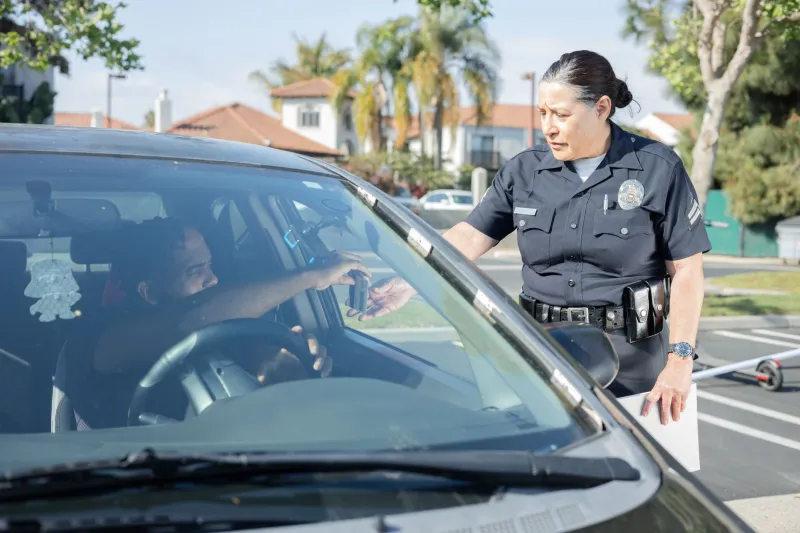
Picture this: you're cruising down Main Street in 1925, and you blow past a stop sign at 45 mph in a 25 mph zone. A police officer pulls you over, writes you a ticket for a dollar, and you hand him exact change from your pocket without a second thought. No license points, no insurance ramifications, no court date — just a buck and you're on your way.
This wasn't some lawless frontier town. This was normal across America for the first half-century of automobile ownership.
When Traffic Laws Were Suggestions
In the 1910s and 1920s, getting a driver's license required about as much skill as getting a library card. Most states didn't require any driving test at all — you simply filled out a form, paid a small fee, and received your permit to operate a two-ton death machine on public roads.
New York didn't implement a road test until 1952. Before that, if you could sign your name and had a few dollars, you were legally qualified to drive. The assumption was that anyone smart enough to afford a car was probably smart enough to figure out how to use it responsibly.
Traffic violations carried fines that would make modern drivers weep with envy. A speeding ticket in 1930 might cost you 50 cents to two dollars — roughly equivalent to $8-30 today. Compare that to modern speeding fines that routinely exceed $200, and you begin to understand how seriously America took road safety in the early automotive era.
The Wild West of American Highways
Drunk driving wasn't even a recognized crime in most states until the 1930s. Before then, police might arrest someone for "reckless driving" or "disturbing the peace," but the specific act of operating a vehicle while intoxicated wasn't codified into law. Even when it was, the penalties were laughable — often just a small fine or a night in jail to sleep it off.
The first breathalyzer wasn't invented until 1953, and it took decades more before it became standard police equipment. Before then, determining intoxication was largely a matter of officer observation: Could the driver walk a straight line? Could they touch their nose with their finger? This primitive field testing meant that countless impaired drivers simply talked their way out of tickets.
Speed limits, where they existed at all, were treated more like general guidelines. The first speed limit sign in America appeared in 1901 in Connecticut, restricting automobiles to 12 mph in cities and a blazing 15 mph on country roads. But enforcement was sporadic at best, and radar guns wouldn't be invented until 1947.
When Insurance Was Optional and Accidents Were Personal
Perhaps most shocking to modern drivers, car insurance wasn't mandatory anywhere in America until Massachusetts required it in 1927. Even then, most states didn't follow suit until the 1950s and 1960s. If you caused an accident, you were personally liable for damages — assuming anyone could track you down.
Without insurance requirements, license plate databases, or reliable vehicle registration systems, hit-and-run accidents were often unsolvable mysteries. A driver could simply leave the scene and face virtually no consequences unless someone happened to write down their license plate number and the police felt motivated enough to investigate.
The point system that modern drivers know and fear — where violations accumulate and can lead to license suspension — didn't exist in most states until the 1960s. You could rack up dozens of traffic tickets with no cumulative consequences beyond paying the individual fines.
The Technology That Changed Everything
The transformation of American traffic enforcement began with World War II technology finding peacetime applications. Radar, originally developed to detect enemy aircraft, was adapted for measuring vehicle speeds in the late 1940s. Suddenly, police could prove exactly how fast you were going, eliminating the "I wasn't speeding, officer" defense.
The 1960s brought computerized record-keeping, allowing states to track driving violations across jurisdictions. A reckless driver could no longer simply move to the next county to escape their driving record.
Breathalyzers became standard police equipment in the 1970s, providing objective measurements of blood alcohol content that could hold up in court. This technological advancement coincided with growing public awareness of drunk driving dangers, particularly after organizations like Mothers Against Drunk Driving began advocating for stricter enforcement.
 Photo: Mothers Against Drunk Driving, via www.gbpicshd.com
The Modern Reality Check
Today's traffic enforcement would be unrecognizable to a 1920s driver. A single speeding ticket can cost hundreds of dollars, raise your insurance premiums for years, and add points to your license that accumulate toward suspension. Drunk driving carries mandatory jail time in many states, along with license suspension, massive fines, and requirements for ignition interlock devices.
Modern police cruisers are equipped with computer terminals that can instantly access your driving record, outstanding warrants, insurance status, and vehicle registration. License plate readers automatically scan thousands of plates per hour, flagging stolen vehicles or drivers with suspended licenses.
The casual relationship Americans once had with traffic laws seems almost quaint now. But the statistics tell a sobering story: despite dramatically more vehicles on the road, traffic fatality rates per mile driven have plummeted since the 1920s, largely because we finally started taking road safety seriously.
The Price of Progress
This transformation from automotive anarchy to strict regulation saved countless lives, but it also fundamentally changed the relationship between Americans and their government. The casual freedom of the early automobile era — when a traffic stop meant a friendly chat and a dollar fine — gave way to a system where every interaction with law enforcement is documented, tracked, and potentially life-altering.
Whether this trade-off was worth it becomes clear every time you safely navigate an intersection, confident that other drivers understand the rules and face real consequences for breaking them. The America that treated traffic laws as suggestions was also the America where a simple drive to the store carried risks we can barely imagine today.