Flying Blind: The Chaotic, Deadly Era Before Someone Finally Started Watching the Skies
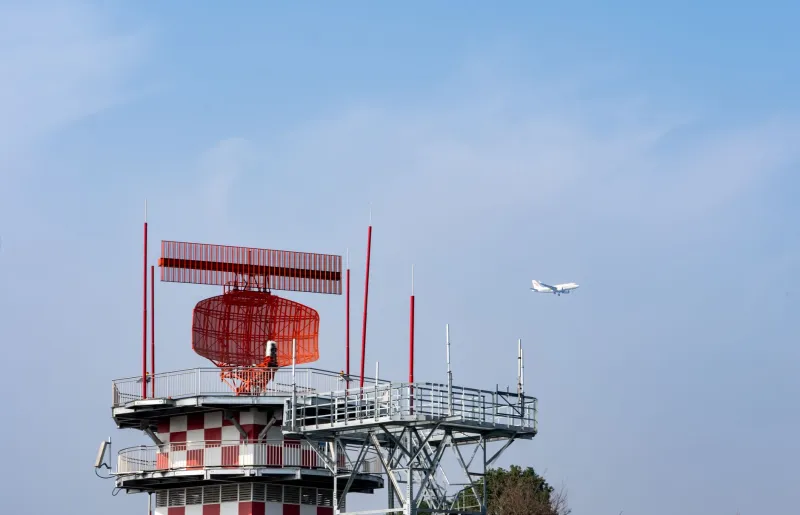
Every time you settle into a window seat and listen to the flight attendant's safety briefing, somewhere in a darkened room a controller is watching a blip on a radar screen that represents your aircraft. They know your altitude, your speed, your heading, and your destination. They are in constant radio contact with your pilots. There are backup systems for the backup systems.
It was not always this way. For much of aviation's first half-century, the skies above America were essentially ungoverned — a vast, three-dimensional space where aircraft moved on faith, radio beacons that frequently failed, and the visual judgment of pilots peering through cockpit windows at cloud banks and terrain below. The miracle isn't that there were accidents. The miracle is that there weren't more of them.
Navigating by Landmark and Prayer
Commercial aviation in the 1920s was, by any modern standard, terrifyingly improvised. The first airmail pilots — the daredevils who flew mail routes across the country starting in 1918 — navigated by following railroad tracks and rivers, recognizing towns by their water towers, and hoping that the weather held. At night, the government lit bonfires along certain routes to guide pilots in the dark. Actual bonfires.
By the late 1920s, radio beacons had replaced the fires, but the system remained deeply fragile. A pilot flying from Chicago to New York would tune into a series of ground-based transmitters that sent signals in different directions, allowing rough triangulation of position. In clear weather, with functioning equipment and no interference, it worked adequately. In fog, heavy cloud, or electrical storms — conditions that aviation routinely encounters — it worked poorly or not at all.
There was no one watching from the ground. No authority tracking which aircraft were in the air, where they were headed, or how close they might be to each other. Airlines kept rough logs of departure times and expected arrivals, but between takeoff and landing, a plane essentially vanished into the sky.
The First Attempts at Order
The first air traffic control facility in the United States opened in Newark, New Jersey, in 1935. It was staffed not by government employees but by airline personnel — the airlines themselves had gotten tired of the chaos and decided to do something about it. Controllers tracked aircraft using handwritten notes, blackboards, and small wooden blocks moved across a map table. There were no radar screens. No electronic tracking. Just people making phone calls between airports, scribbling information, and trying to build a mental picture of where aircraft were.
The system spread quickly to Chicago and Cleveland, and the federal government took over operations in 1936. But "taking over" is generous language. The technology was primitive, the coverage was incomplete, and the fundamental problem — that you couldn't actually see aircraft in the sky — remained completely unsolved.
Radar existed as a military technology by World War II, but it took years after the war's end before it was meaningfully integrated into civilian air traffic management. Through the late 1940s and into the 1950s, American skies remained dangerously uncoordinated, particularly as jet-age aircraft began flying higher and faster than the old prop planes the system had been designed around.
When the Sky Fell Over the Grand Canyon
On June 30, 1956, two airliners — a United Airlines DC-7 and a TWA Constellation — collided over the Grand Canyon, killing all 128 people aboard both aircraft. It was the deadliest aviation disaster in American history to that point, and it was entirely the result of a system that had no way of keeping two aircraft from occupying the same piece of sky.
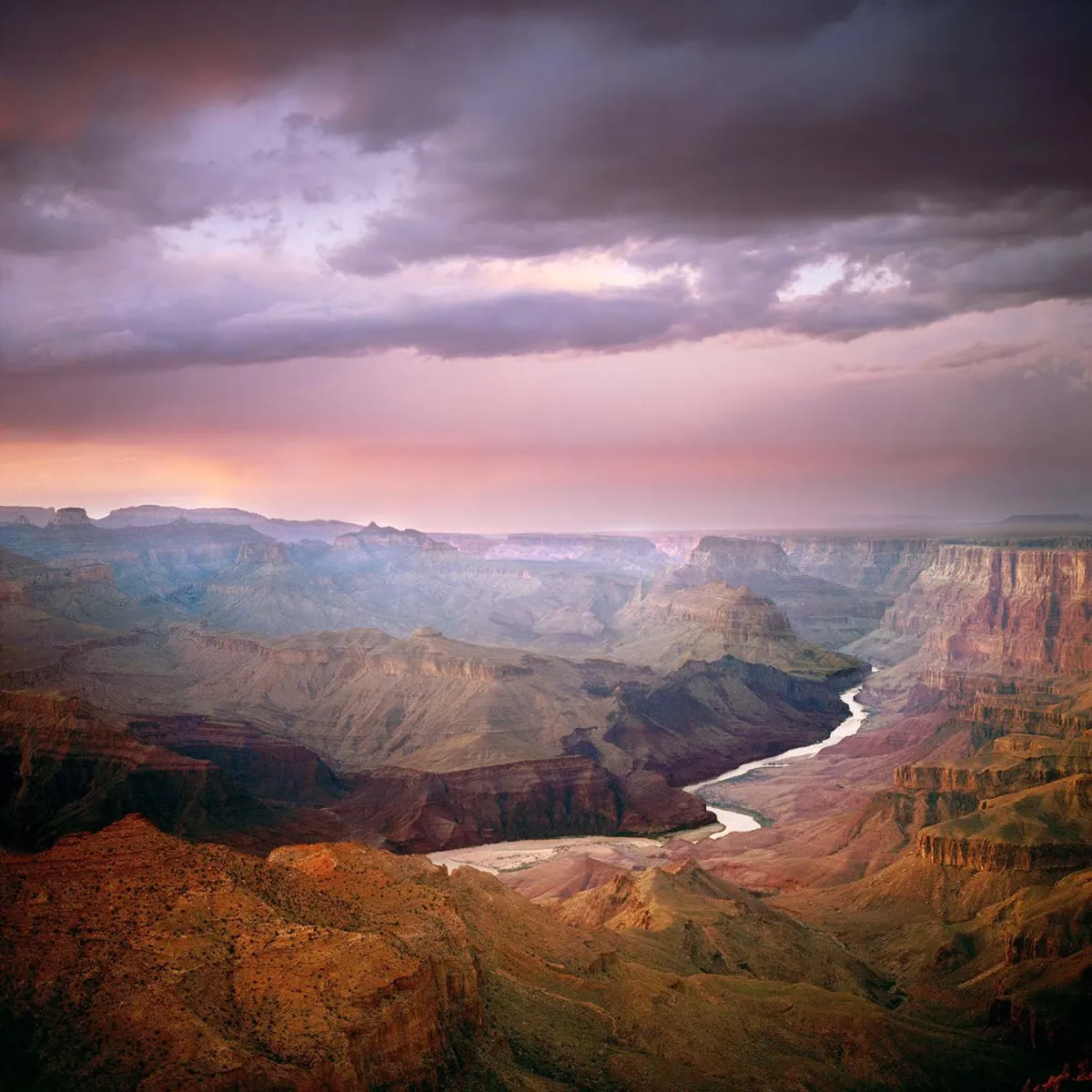 Photo: Grand Canyon, via chrisbrownphotography.com
Both flights had been cleared to fly at the same altitude over the same general area. Controllers on the ground had no radar coverage of the region. No one knew the aircraft were converging. The wreckage rained down into the canyon below.
The public outcry was enormous. Congress responded by passing the Federal Aviation Act of 1958, which created the Federal Aviation Agency — later renamed the FAA — and for the first time established a unified federal authority responsible for managing all of American airspace. The Grand Canyon disaster didn't create air traffic control, but it forced the country to get serious about it in a way that piecemeal improvements had never managed.
Building the Invisible Architecture
What followed was one of the most ambitious infrastructure projects in American history, mostly invisible to the public because it existed in the sky. Radar networks were built and expanded. En-route centers were established to track aircraft across vast stretches of airspace between airports. Communication systems were standardized. Separation rules — the minimum distances required between aircraft — were codified and enforced.
The introduction of transponders, which allowed aircraft to actively broadcast their identity and altitude to ground radar, was transformative. Suddenly controllers could see not just a blip but a labeled, altitude-tagged blip. They could see where you were and how high you were flying simultaneously.
By the time the jet age was fully underway in the 1960s, the FAA was managing tens of thousands of flights a day across a continent-spanning network of radar coverage and communication links. It was imperfect — there were still accidents, still near-misses, still regions of inadequate coverage — but it was unrecognizable compared to the blackboard-and-wooden-block era of two decades earlier.
The Sky Today
Modern air traffic control is a genuinely astonishing piece of infrastructure. The FAA manages roughly 45,000 flights every single day across American airspace. Controllers use digital radar displays, satellite-based positioning data, and automated conflict-detection software that alerts them when two aircraft's flight paths are projected to come too close. Aircraft communicate digitally as well as by voice. New systems under the FAA's NextGen program are migrating the entire network toward GPS-based navigation, allowing tighter, more efficient routing that saves fuel and reduces delays.
At any given moment, about 5,000 aircraft are airborne over the United States. They are all being watched.
The contrast with 1935 — when a controller in Newark was moving wooden blocks across a table and hoping his phone calls got through — is almost impossible to fully absorb. Commercial aviation went from one of the most statistically dangerous forms of transportation to one of the safest in human history, and a massive part of that transformation happened not inside aircraft cabins but in the unglamorous radar rooms and communication centers below.
Somebody finally started watching. It turns out that made all the difference.