The Moral Police of Hollywood: When Every Movie Needed Permission to Exist

The Scandalous Birth of Movie Morality
Hollywood in the 1920s was America's Babylon. Stars like Fatty Arbuckle threw parties that ended in mysterious deaths. Directors like Cecil B. DeMille filmed orgies for biblical epics, claiming artistic necessity. Movie theaters showed films with titles like "The Sheik" and "Flaming Youth" that made church groups reach for their smelling salts.
Then came the panic. Religious leaders, women's groups, and politicians declared war on Hollywood's moral corruption. They threatened federal censorship, boycotts, and legislation that would have destroyed the industry entirely.
Faced with extinction, Hollywood chose self-regulation. In 1930, the Motion Picture Producers and Distributors Association adopted the Production Code — better known as the Hays Code, named after its chief enforcer, Will Hays.
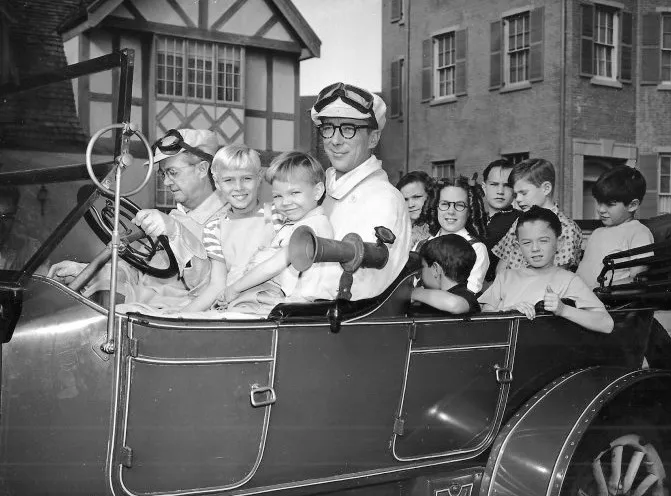
 Photo: Will Hays, via i.pinimg.com
What followed was the most comprehensive censorship system in American entertainment history.
The Rulebook for American Dreams
The Hays Code wasn't just a list of forbidden words or banned topics. It was a complete moral philosophy disguised as movie guidelines. The code's central principle was deceptively simple: "No picture shall be produced that will lower the moral standards of those who see it."
In practice, this meant Hollywood had to follow rules that would make a Victorian schoolmarm blush:
- Married couples couldn't be shown in the same bed, even if they were actually married in real life
- Criminals could never be portrayed sympathetically or allowed to profit from their crimes
- Adultery and illicit sex could be suggested but never explicitly shown or rewarded
- Profanity was completely banned — including "damn," "hell," and even "nuts"
- Excessive drinking, drug use, and gambling were forbidden
- Interracial relationships were absolutely prohibited
The code even regulated how long a kiss could last on screen: no more than three seconds, and the couple's lips had to remain closed.
The Censorship Machine
Starting in 1934, no major studio could release a film without approval from the Production Code Administration, led by Joseph Breen — a man who wielded more power over American culture than most Supreme Court justices.
Breen's office reviewed every script, examined every frame of film, and demanded changes to anything that violated their interpretation of moral decency. Directors learned to shoot scenes multiple ways: one version for Breen's approval, and secret alternate takes they hoped to sneak past his inspectors.
The system was remarkably thorough. Breen's staff tracked the moral implications of camera angles, costume choices, and even background music. A woman's dress couldn't be too low-cut. A villain couldn't be too charismatic. A crime couldn't be too cleverly executed, lest it inspire copycat behavior.
Studios that tried to bypass the system faced devastating consequences. Theaters belonging to the Motion Picture Association — which meant virtually every cinema in America — refused to show unapproved films. Without distribution, even the most expensive productions became worthless.
Hollywood's Moral Straitjacket
The code's influence shaped three decades of American cinema in ways that seem almost surreal today. Directors became masters of implication and suggestion, developing a visual language of metaphor that audiences learned to decode.
When Clark Gable carried Vivien Leigh upstairs in "Gone with the Wind," the camera discretely panned to a burning candle — because showing them actually in bed together would have been scandalous. When characters drank alcohol, they suffered immediate consequences: hangovers, accidents, or moral degradation.
Even historical accuracy took a backseat to moral messaging. Biblical epics couldn't show too much flesh, despite being set in ancient times when clothing was considerably more revealing. War movies couldn't depict the actual brutality of combat, creating sanitized versions of humanity's bloodiest conflicts.
The code's racial provisions were particularly damaging. Interracial romance was completely forbidden, reinforcing America's segregationist attitudes. When Sidney Poitier finally broke through as a leading man in the 1950s, his characters could never be shown in romantic relationships with white women.
The Cracks in the Foundation
By the 1950s, the code was fighting a losing battle against changing American attitudes and foreign competition. European films that ignored Hollywood's moral restrictions were gaining popularity in American art houses. Television was offering more realistic portrayals of family life than movies were allowed to show.
Directors like Billy Wilder and Otto Preminger began pushing boundaries, creating films that technically followed the code while subverting its spirit. "Some Like It Hot" featured cross-dressing and sexual innuendo that would have been unthinkable a decade earlier. "The Moon is Blue" was released without code approval and became a box office hit, proving that audiences were ready for more adult content.
The breakthrough came with "Who's Afraid of Virginia Woolf?" in 1966. Mike Nichols' film contained language and themes that shattered every code restriction, yet Warner Brothers released it anyway. When the movie became both a critical and commercial success, the writing was on the wall.
The New Wild West
In 1968, the Motion Picture Association replaced the Production Code with the ratings system we know today: G, M (later PG), R, and X. Instead of banning content, the new system simply labeled it for appropriate audiences.
The change was revolutionary. Within months, American screens exploded with previously forbidden content. "Bonnie and Clyde" showed graphic violence that would have been unthinkable under the code. "The Graduate" explored adultery and seduction with a frankness that shocked and thrilled audiences.
By the 1970s, directors like Martin Scorsese, Francis Ford Coppola, and Robert Altman were creating films that examined the dark complexities of American life without moral judgment or sanitized endings. Characters could be morally ambiguous. Criminals could be sympathetic. Sex could be passionate rather than punitive.
The Streaming Revolution
Today's entertainment landscape would be completely incomprehensible to Will Hays and Joseph Breen. Netflix produces content that ranges from family-friendly animation to graphic crime dramas, all available on the same platform. Viewers choose their own moral boundaries rather than having them imposed by censors.
The transformation has been so complete that most Americans under 40 have difficulty understanding how the old system even functioned. The idea that a small group of unelected officials once controlled what 200 million people could watch seems almost un-American.
Yet streaming platforms still face pressure from advertisers, international markets, and vocal advocacy groups. The mechanisms of control have evolved, but the tension between creative freedom and social responsibility remains as relevant as ever.
What We Gained and Lost
The end of the Hays Code liberated American cinema to explore the full complexity of human experience. Modern films can address topics like mental health, addiction, and social justice with a nuance that was impossible under the old system.
But something was also lost in the transition. The code's restrictions forced filmmakers to develop extraordinary creativity within constraints. Directors like Frank Capra and John Ford created deeply moving films about love, sacrifice, and redemption without explicit content.
More importantly, the shared moral framework — however flawed — created common cultural references that helped bind American society together. When everyone watched the same sanitized version of reality, it was easier to maintain social consensus about basic values.
Today's fragmented media landscape offers unprecedented choice and freedom, but it also allows people to retreat into moral echo chambers where their existing beliefs are never challenged. We gained artistic freedom and lost cultural cohesion.
The Hays Code's collapse marked the end of an era when moral authority could be centralized and enforced. For better and worse, Americans now navigate their own path through an entertainment landscape that offers every possible perspective on right and wrong — and leaves the final judgment entirely up to them.