The 900-Page Store That Reached Every Farmhouse in America: How Sears Rewrote the Rules of Shopping

Imagine living fifty miles from the nearest town. Your local general store stocks maybe three hundred items, the prices are whatever the owner decides, and if they don't carry something, you simply go without. That was daily reality for tens of millions of Americans in the late 1800s — a consumer landscape so limited that the word "choice" barely applied.
Then, in 1888, a railroad watch salesman named Richard Sears mailed out a single-page flyer.
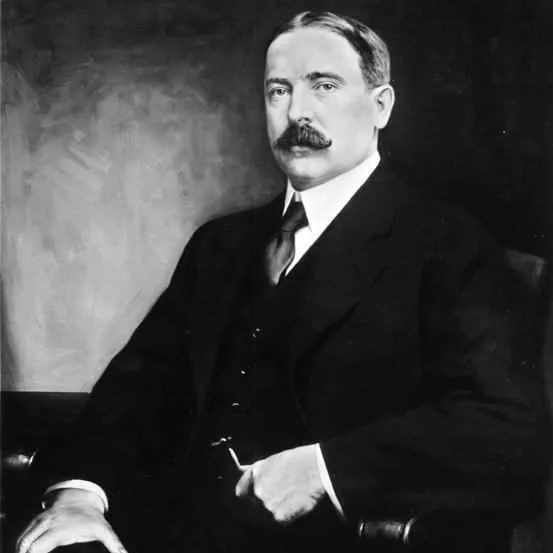 Photo: Richard Sears, via www.davidgunter.com
By 1897, that flyer had become a 500-page catalog. By the early 1900s, it was pushing 900 pages. And by the time most Americans had heard of Henry Ford, the Sears Roebuck catalog had quietly become the most powerful retail force the country had ever seen.
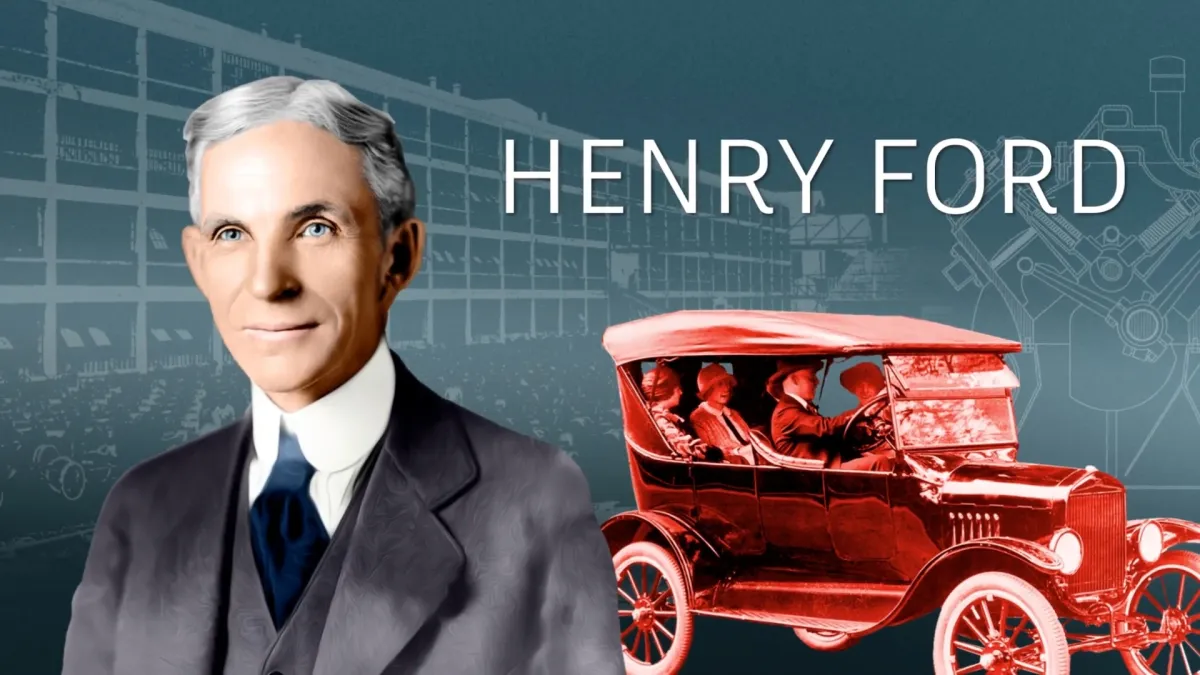 Photo: Henry Ford, via images.ctfassets.net
A Store You Could Hold in Both Hands
The catalog arrived annually — sometimes twice a year — and in rural households, it was treated almost like a second Bible. Families studied it together. Children dog-eared pages. Farmers planned purchases months in advance. In communities where the nearest department store might as well have been on the moon, this thick, illustrated book was a portal to the modern world.
You could order suits, dresses, boots, and undergarments. You could furnish an entire house — sofas, wardrobes, iron beds, and kitchen stoves. You could buy medical equipment, musical instruments, bicycles, and farm machinery. Sears even sold complete, pre-cut homes — the famous "kit houses" — that arrived by rail in crates and could be assembled on your land over a few weekends. More than 70,000 of those homes were ordered between 1908 and 1940. Some are still standing.
The prices were printed right there on the page. Fixed. Non-negotiable. Transparent. That alone was revolutionary. At a time when general store owners routinely adjusted prices based on who was asking, the Sears catalog introduced something radical: everyone paid the same amount.
What the Catalog Did to Small-Town Merchants
Local store owners were furious — and not quietly so. Some organized campaigns urging customers to burn their catalogs. A few offered small rewards to neighbors who turned in copies. In certain towns, a kind of social pressure formed around catalog shopping, as though buying from Sears was a betrayal of community loyalty.
But the economics were impossible to argue with. A plow that cost twelve dollars at the local hardware store might cost seven dollars from Sears, delivered to your door. For farm families operating on razor-thin margins, that difference wasn't trivial — it was the difference between staying solvent and falling behind.
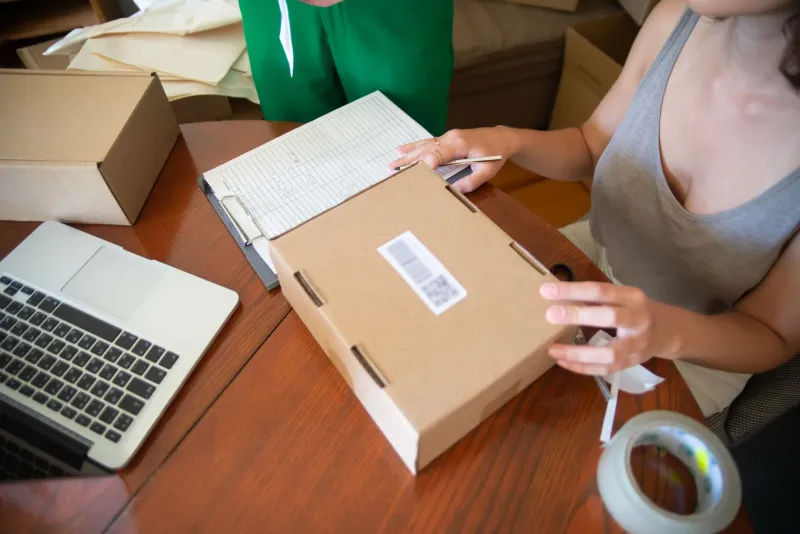
By 1906, Sears was processing so many orders that it built a 40-acre fulfillment complex in Chicago — the largest business building in the world at the time — designed by a young efficiency consultant named Otto Doering. The operation ran like a machine: orders arrived, were sorted, filled, and shipped within hours. Sound familiar? It should. Doering's system is widely credited as a direct ancestor of modern warehouse logistics.
The Catalog as Cultural Equalizer
There's a dimension to the Sears story that goes beyond retail economics. For many Americans — particularly Black families in the Jim Crow South — the catalog represented something the local economy could not: dignity.
In towns where Black customers were routinely turned away from stores, forced to use back entrances, or denied service altogether, the Sears catalog asked no questions and made no distinctions. You mailed in your order form, you sent your money, and your goods arrived. The catalog couldn't see your face. It didn't know your neighborhood. It just delivered.
For immigrant communities, too, the catalog bridged a gap. New arrivals who spoke little English could point to pictures and fill out order forms without navigating the social complexity of an unfamiliar store. The catalog met people where they were.
The Long Decline and the Familiar Ending
By mid-century, something had shifted. As car ownership spread and highways connected previously remote communities to actual stores, the catalog's core advantage — reaching people who had no other option — began to erode. Americans who could now drive to a Sears retail location (the company had been building physical stores since the 1920s) often preferred to see products in person.
Sears pivoted hard toward brick-and-mortar. The general catalog was discontinued in 1993 — a decision that, in hindsight, looks either inevitable or catastrophic depending on your view of what the company was really selling.
Because what Sears had always really sold was convenience. The ability to get what you needed without going through friction — geographic, social, or financial. When the internet arrived and a new generation of companies began offering that same frictionless access at even lower prices, Sears found itself in the same position the old general stores had occupied a century earlier: defending a model that history had already decided to move past.
Amazon, in other words, didn't invent anything. It just found a faster way to do what Richard Sears had done with a printing press and a railroad network.
What We Lost When the Pages Stopped Turning
There's something quietly melancholy about the catalog's disappearance — not just as a business story, but as a cultural one. Those annual arrivals were events. Families gathered around them. The act of choosing something from a catalog, waiting weeks for it to arrive, and finally holding it in your hands carried a weight that one-click ordering has never quite replicated.
The Sears catalog connected a fractured, sprawling country. It made the same goods available to a Kansas wheat farmer and a Maine fisherman and a Georgia sharecropper. For a nation that has always struggled with the gap between its cities and its rural communities, that kind of reach mattered in ways that went beyond commerce.
We have more choices now than any Sears customer could have imagined. But somewhere in the efficiency, something got lost — the sense that receiving a package was worth getting excited about.