Three Minutes to Chicago: How a Phone Call Across State Lines Once Felt Like a Luxury You Could Barely Afford
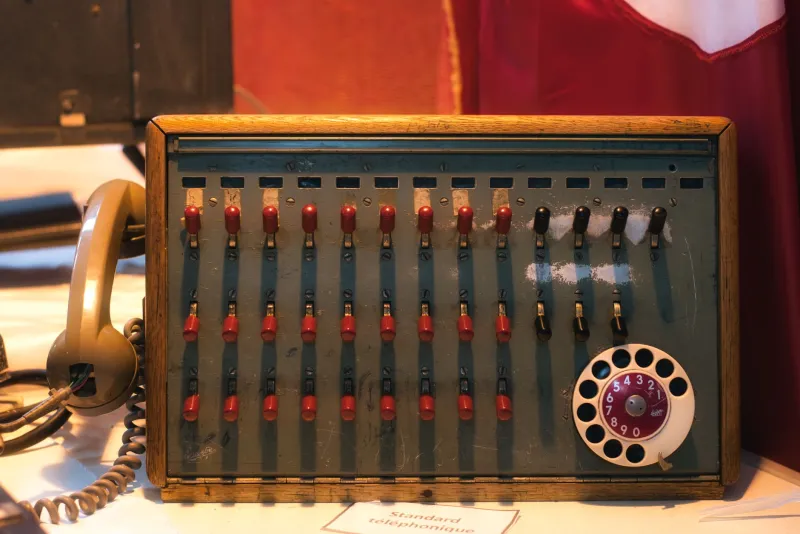
Somewhere in a drawer in an old American house, there might still be a handwritten note that says something like: Call Margaret Sunday, 7 PM, keep it under five minutes. That note wasn't about being rude to Margaret. It was about money. Serious money. The kind that made families plan phone calls the way they planned major purchases.
Long distance telephone service in mid-twentieth century America was expensive enough to reshape behavior, limit relationships, and make the telephone feel less like a communication tool and more like a financial instrument you had to use carefully.
The Operator Was the First Obstacle
Before direct dialing became standard across the country — a process that wasn't complete until well into the 1960s — making a long distance call meant picking up the receiver and asking a human operator to connect you. This wasn't instantaneous. Depending on where you lived and where you were calling, the connection process could take minutes. During busy periods, it could take considerably longer.
You'd give the operator the number, she'd route it through a series of switching stations, and eventually — if the circuits weren't congested — you'd hear the phone ringing on the other end. The whole process had a formality to it that modern communication has completely erased. You weren't just calling someone. You were initiating a procedure.
Station-to-station calls were cheaper: you'd pay for the connection regardless of who answered. Person-to-person calls were more expensive but guaranteed you'd only pay if the specific individual you wanted actually picked up. Families developed strategies around these options the way people today comparison-shop for flights.
The Numbers Were Genuinely Shocking
In 1915, AT&T launched the first transcontinental telephone service between New York and San Francisco. The cost for a three-minute call: $20.70. In 1915 dollars. Adjusted for inflation, that's somewhere north of $600 for a single three-minute conversation.
Even by the 1950s and 1960s, when the technology had matured and costs had dropped considerably, long distance remained a significant household expense. A three-minute evening call from New York to Los Angeles in 1960 cost roughly $3.00 — equivalent to about $30 today. That might not sound catastrophic until you consider that people weren't making one call a week. They were managing relationships across the country, and every call added up in a way that shaped how often they reached out.
For working-class families, the calculation was stark. Long distance wasn't casual. It was reserved for emergencies, major announcements, or the holidays — moments when the emotional necessity outweighed the financial sting.
The Rituals That Built Up Around the Cost
Because calls were expensive, Americans developed an entire set of behaviors designed to extract maximum value from minimum time. Calls were planned in advance, often coordinated by letter. Families would agree on a specific time and day so everyone was near the phone and ready to talk. Nobody wanted to pay for a connection and then spend thirty seconds establishing whether the other person was available.
Some families used a system of coded signals to avoid paying at all. A person would call collect, the recipient would hear the caller's name from the operator, and then decline the charges — the mere ringing of the phone serving as a pre-arranged message. I arrived safely. I'm thinking of you. Call me when you can. All communicated for free through a declined collect call.
Holidays were financial events for phone companies. Christmas Day long distance traffic was so heavy that circuits regularly became overwhelmed. AT&T ran advertisements encouraging customers to call before Christmas Day to avoid busy lines — not out of concern for the customer experience, but because the volume was genuinely unmanageable.
What Deregulation and Technology Actually Did
The 1984 breakup of AT&T's monopoly began a long process of competitive pressure that started pushing long distance prices downward. MCI and Sprint entered the market. Rates dropped. By the mid-1990s, long distance had gone from a luxury to a commodity.
Then the internet arrived and rewrote the rules entirely. Email eliminated the urgency that had made expensive phone calls necessary. VoIP services in the early 2000s made calling almost free. And the smartphone era finished the job. Today, virtually every American cell phone plan includes unlimited domestic calling as a baseline feature — not a premium add-on, not something you budget for separately. Just a thing your phone does.
Video calling through FaceTime, Zoom, or WhatsApp is free. Texting is free. A person in New York can maintain a daily, casual, low-stakes connection with someone in Seattle without spending a single additional dollar beyond their existing monthly plan.
The Relationship Consequences Were Real
It's worth sitting with what those costs actually meant for people's lives. Families separated by distance — immigrants, people who'd moved for work, adult children scattered across the country — maintained relationships primarily through letters. Phone calls were punctuation marks, not the ongoing conversation they've become.
Grandparents knew their grandchildren through photographs and occasional visits. Friendships that crossed state lines faded in ways that today's connections simply don't. The friction of expensive communication wasn't just an inconvenience. It was a structural feature of American social life that shaped which relationships survived distance and which ones slowly dissolved.
The casual Sunday afternoon FaceTime call with a sibling three time zones away would have seemed like science fiction to someone budgeting their long distance minutes in 1962. Not the technology — the casualness. The sheer taken-for-granted ease of it.
That's the part worth remembering.