The Great American Childhood Lockdown: How We Traded Adventure for Anxiety
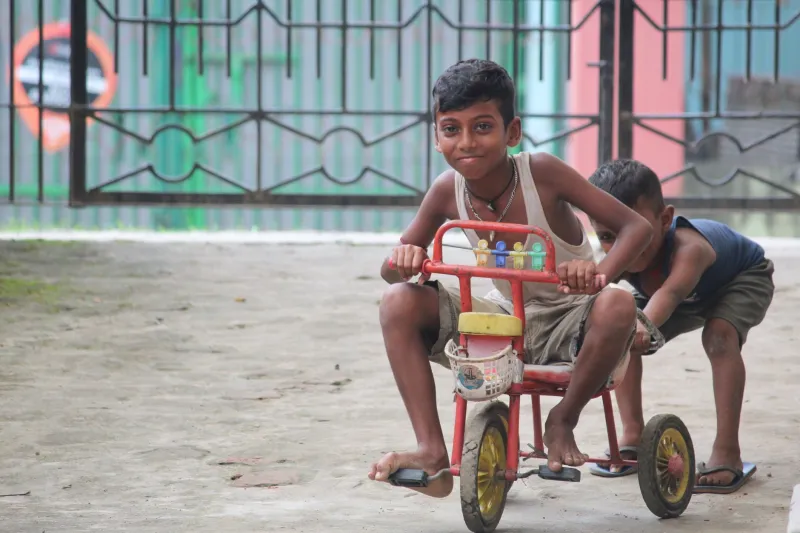
Summer 1975: Eight-year-old Kevin grabs his bike after breakfast and doesn't return until the streetlights flicker on. He's explored construction sites, climbed trees, and maybe even talked to strangers. His mother hasn't worried once.
Summer 2024: Eight-year-old Kevin would be the subject of a missing child alert, his parents investigated by social services, and his photo shared on neighborhood Facebook groups within an hour.
What happened to American childhood isn't just different — it's the complete opposite of how we used to raise kids.
When Children Were Expected to Disappear
The 1970s represented the golden age of childhood independence. Studies from that era show the average child could roam freely within a one-mile radius of home. They walked to school alone, played in parks without adult supervision, and solved their own problems without immediately calling for help.
This wasn't neglect — it was intentional parenting. Adults believed children needed to develop independence, street smarts, and resilience. "Go outside and don't come back until dinner" was standard operating procedure, not child abandonment.
Children organized their own games, settled their own disputes, and learned to navigate the world without constant adult intervention. They built forts in vacant lots, rode bikes across town, and created elaborate neighborhood adventures that lasted entire days.
The Numbers Don't Add Up
Here's the shocking truth: childhood has never been safer, yet we've never been more terrified.
Child abduction rates have actually declined since the 1970s. According to FBI statistics, stranger abductions — the fear that drives modern parenting paranoia — occur in fewer than 0.00007% of cases. Your child is statistically more likely to be struck by lightning than kidnapped by a stranger.
Child mortality from accidents has dropped by 60% since 1975. Playground injuries are down 20%. Even accounting for better emergency medicine, kids today face fewer physical dangers than their parents did.
Yet the average distance a child can travel alone from home has shrunk from one mile in 1970 to one-tenth of a mile today. We've created the safest childhood in human history, then locked our kids away from experiencing it.
The Media Panic That Changed Everything
The transformation began with a few high-profile cases that received unprecedented media coverage. The 1979 disappearance of Etan Patz in New York City became the first missing child case to receive national television attention. Adam Walsh's murder in 1981 led to the creation of "America's Most Wanted" and milk carton missing child campaigns.
 Photo: New York City, via wallpapercave.com
 Photo: Etan Patz, via s1.pictoa.com
These tragic but statistically rare events were covered so intensively that parents began to believe child abduction was epidemic. The new 24-hour news cycle needed content, and missing children generated ratings. Soon, every local child disappearance became national news.
The "stranger danger" campaign, while well-intentioned, created a generation of parents who viewed every unknown adult as a potential threat. Children learned to fear neighbors, avoid talking to strangers, and depend entirely on known adults for safety — exactly the opposite of the street smarts previous generations developed.
The Helicopter Takes Flight
By the 1990s, "helicopter parenting" had become the new normal. Parents began scheduling every minute of their children's time, driving them to activities they once walked to alone, and supervising play that previous generations handled independently.
Playgrounds were redesigned to eliminate any possibility of injury. Jungle gyms disappeared. Merry-go-rounds were banned. Seesaws became extinct. The playground equipment that built coordination and confidence in earlier generations was deemed too dangerous for modern children.
School policies reflected this new anxiety. Walking to school alone became grounds for truancy charges against parents. Playing tag was banned for being too aggressive. Competitive sports eliminated score-keeping to protect self-esteem.
The Price of Protection
This safety-first approach has had unintended consequences. Anxiety disorders among children have skyrocketed. Depression rates have tripled since 1990. Emergency room visits for self-harm among pre-teens have increased by 200% in the last decade.
Children who never learn to navigate challenges independently struggle with basic problem-solving as adults. College counselors report unprecedented numbers of freshmen who can't handle minor setbacks without calling their parents.
Physical fitness has plummeted. When children can't walk to friends' houses or play unsupervised outdoor games, they become sedentary. Childhood obesity has tripled since 1975, directly correlated with the decline in independent outdoor play.
The Criminalization of Childhood Freedom
Modern parents who allow 1970s-style childhood freedom face legal consequences. In 2014, a South Carolina mother was arrested for letting her nine-year-old play alone in a park. Maryland parents faced Child Protective Services investigation for allowing their children to walk home from school.
What previous generations considered normal parenting is now labeled neglect. The same independence that built resilient adults is treated as endangerment. We've literally criminalized the childhood that raised the most successful generation in American history.
The International Perspective
Other countries think we've lost our minds. In Japan, first-graders ride subways alone to school. Danish children play in parks without adult supervision until age 12. German children walk through forests and climb trees as part of standard kindergarten curriculum.
These countries haven't experienced the childhood anxiety epidemic plaguing America. Their children develop confidence, independence, and resilience because they're allowed to face age-appropriate challenges without constant adult intervention.
What We've Forgotten
The greatest dangers to modern children aren't strangers in parks — they're anxiety, depression, and learned helplessness. We've protected our children from imaginary threats while exposing them to real psychological damage.
The skills children once learned through independent exploration — problem-solving, risk assessment, social negotiation, physical confidence — can't be taught in supervised activities. They must be discovered through trial, error, and yes, occasional failure.
Finding the Balance
This isn't about returning to complete 1970s-style freedom, but recognizing that some risk is essential for healthy development. Children need opportunities to succeed and fail without adult intervention. They need to experience the confidence that comes from solving their own problems.
The irony is heartbreaking: in our desperate attempt to keep children safe, we've made them more vulnerable than ever. Not to external dangers, which remain statistically negligible, but to the internal struggles that come from never learning to trust themselves in the world.
American childhood went from adventure to anxiety in just one generation. The question isn't whether we can afford to give children more freedom — it's whether we can afford not to.