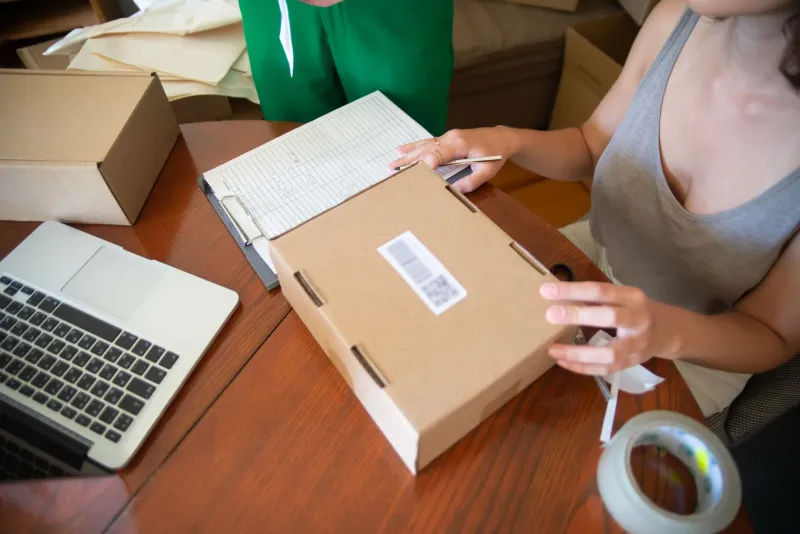
Before Amazon, There Was a Catalog: How the U.S. Mail Turned Into America's First Online Store
Somewhere in rural Kansas in 1910, a farm family sits around a kitchen table on a winter evening. The nearest town is twelve miles away over frozen roads. The nearest city with a proper department store is sixty miles beyond that. And yet, within the next two weeks, a new pair of work boots, a cast-iron stove, three yards of calico fabric, and a mechanical cream separator will all arrive at their door — ordered from a book thicker than a Bible and delivered by a mail carrier who makes the route regardless of weather.
This wasn't a luxury. For tens of millions of Americans living outside urban centers at the turn of the 20th century, the mail-order catalog was the entire consumer economy. It was Amazon, Target, Home Depot, and the local pharmacy rolled into a single annual publication that families kept on the kitchen shelf like a reference text.
The parallels to what we now call e-commerce are almost uncanny — and the disruption it caused to existing retail structures was just as dramatic.
The Catalog That Built an Empire
Richard Sears started selling watches by mail in 1886. By 1894, the Sears, Roebuck and Co. catalog had expanded to 322 pages. By 1908, it ran to nearly 1,500 pages and offered everything from buggy whips to complete kit houses — pre-cut lumber, hardware, and instructions for a full home, shipped by rail and assembled on-site.
 Photo: Richard Sears, via www.mebere.com
The catalog became so central to rural American life that it earned its nickname: the "Wish Book." Children circled items they wanted for Christmas. Farmers planned seasonal purchases around it. Families debated its contents the way modern consumers scroll through product reviews. The 1897 edition alone weighed four pounds.
Montgomery Ward, which had actually pioneered the mail-order model in 1872, was Sears' primary rival and equally dominant. Between the two companies, virtually no category of consumer goods was beyond reach for someone with a mailing address and a few dollars to spend.
 Photo: Montgomery Ward, via www.tvguide.com
The Infrastructure That Made It Possible
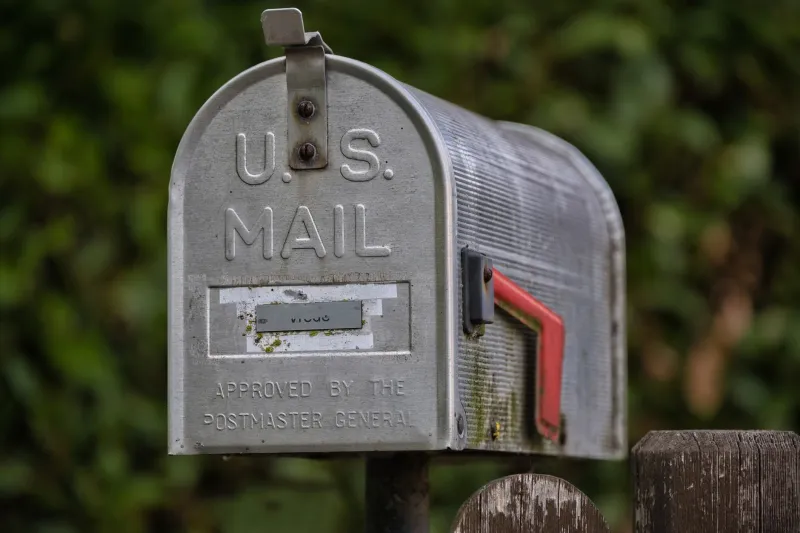
None of this worked without the U.S. Postal Service, which — often underappreciated in the history of American commerce — functioned as the logistics backbone of the entire enterprise. Rural Free Delivery, launched by the USPS in 1896, was the crucial development. Before RFD, rural residents had to travel to town post offices to collect their mail. Afterward, carriers came to them.
Parcel Post, introduced in 1913, was the next leap. It allowed heavier packages to be shipped through the mail system at affordable rates for the first time, and Sears' sales reportedly jumped by $60 million in the year following its introduction. The government had, essentially, built the shipping infrastructure that made a national consumer economy possible — decades before anyone imagined a private company might do the same thing with its own delivery fleet.
The catalog companies understood this dependency and cultivated it aggressively. Sears lobbied in favor of Rural Free Delivery and Parcel Post because their business model required both. The relationship between the private catalog economy and the public postal system was deeply symbiotic in ways that would shape American commerce for generations.
What It Meant for the People Using It
For isolated rural communities — and in 1900, roughly 60 percent of Americans lived outside cities — the catalog wasn't just convenient. It was genuinely equalizing. A farm family in Mississippi could access the same products as a family in Chicago, often at lower prices than what local general stores charged. The catalog undercut rural merchants the same way Amazon later undercut main street retailers, and the complaints from local business owners were almost identical in tone.
Beyond economics, the catalog carried cultural weight. It exposed rural Americans to fashions, technologies, and goods they might never have encountered otherwise. It was, in a modest but real sense, a window into a wider world — the same function that internet shopping serves today for people in underserved or geographically isolated communities.
The famous Sears kit houses — nearly 75,000 of which were sold between 1908 and 1940 — are perhaps the most dramatic illustration of how far the concept extended. You could order a complete two-story house, have it arrive in boxcar loads at your nearest rail depot, and assemble it from the included instruction manual. Thousands of these homes still stand across the Midwest and South, quietly testifying to what a catalog and a postal service could accomplish.
The Fall and Its Echoes
The mail-order model began eroding after World War II as car ownership spread and suburban shopping centers gave Americans new options. Sears pivoted to physical retail and, for a while, thrived. But the underlying logic of the catalog — browse at home, order remotely, receive at your door — never disappeared. It simply waited for a faster technology to carry it.
When Amazon launched in 1995, it was doing something that felt revolutionary but was, in its bones, deeply familiar. The Wish Book had simply become a website. The postal carrier had become a brown delivery van. The two-week wait had compressed to two days, then sometimes two hours. The disruption to brick-and-mortar retail that Amazon caused in the 2000s and 2010s was genuinely new in its scale and speed — but the underlying dynamic had played out before, a century earlier, when a four-pound book arrived in rural farmhouses and changed everything about how Americans bought things.
The catalog era is largely forgotten now, tucked into the nostalgia section of American history alongside ice wagons and telegraph offices. But it was, in its time, every bit as transformative as the platform that replaced it — and the family in Kansas who waited two weeks for their boots would have understood, immediately and completely, what it feels like to track a package.