When Americans Read Clouds Like Books: How We Predicted Weather Before Apps Existed
The Morning Ritual of Weather Guessing
Every morning, millions of Americans wake up and immediately check their phones for the weather forecast. We know if it'll rain at 3:47 PM, what the UV index will be at noon, and whether we need an umbrella for our 6 PM dinner plans. But just 50 years ago, stepping outside meant entering a world of genuine meteorological mystery.
Your grandfather didn't have a weather app. Instead, he had something arguably more impressive: the ability to read the sky like a book, predict storms from the behavior of his cattle, and plan his week around the ache in his joints.
When Weather Came from Western Union
The National Weather Service began as a military operation in 1870, but its reach was laughably limited compared to today. Weather reports traveled by telegraph, arriving hours after observation and covering vast regions with single predictions. If you lived in rural Kansas in 1950, your "local" forecast might have been generated 200 miles away.
The morning weather report on radio was a brief, general affair: "Fair to partly cloudy with possible afternoon showers." That was it. No hourly breakdowns, no precipitation percentages, no satellite imagery showing exactly when the rain would hit your neighborhood.
Most Americans learned to live with uncertainty that would drive us crazy today. Farmers planted crops based on almanacs that predicted weather patterns months in advance using astronomical calculations. Wedding planners had no choice but to hope for the best. Beach trips were genuine gambles.
The Lost Art of Sky Reading
Without reliable forecasts, Americans developed remarkably sophisticated observation skills. Experienced farmers could predict weather 12-24 hours in advance just by watching cloud formations, wind patterns, and animal behavior.
They knew that high, wispy cirrus clouds meant weather changes in 24-48 hours. Mare's tail clouds stretching across the sky warned of approaching fronts. When cumulus clouds started building vertical towers, afternoon thunderstorms were likely.
The wind told stories too. A sudden shift from south to west often meant clearing skies. Pressure changes that made joints ache genuinely predicted storm systems — human bodies became walking barometers.
Weather Folklore That Actually Worked
Many weather sayings that sound like nonsense today were surprisingly accurate. "Red sky at night, sailor's delight; red sky at morning, sailors take warning" has solid meteorological backing. In regions with prevailing westerly winds, red evening skies often indicate high pressure systems moving in.
"When smoke descends, good weather ends" reflected the reality that dropping atmospheric pressure makes smoke hang lower. "A ring around the sun or moon, brings rain or snow upon you soon" accurately predicted the ice crystals in cirrus clouds that precede weather fronts.
Cows lying down before storms? There's truth to it. Animals are sensitive to barometric pressure changes and often seek shelter before humans notice anything unusual.
The Tools of Amateur Meteorologists
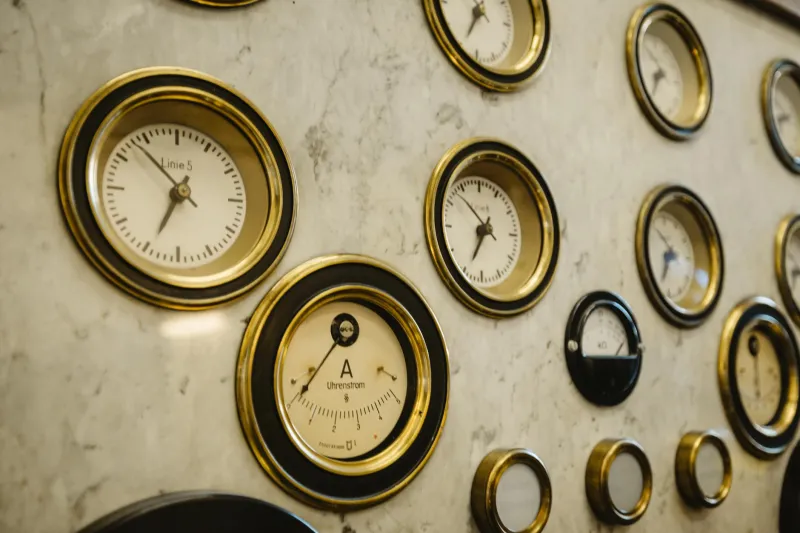
Middle-class homes often featured barometers — ornate instruments that measured atmospheric pressure. Families checked them religiously, watching for the dropping pressure that signaled approaching storms.
Farmers invested in weather vanes, rain gauges, and thermometers, creating their own micro-weather stations. The Farmers' Almanac, first published in 1818, became essential reading, offering seasonal predictions based on astronomical patterns and historical weather data.
Some dedicated weather watchers maintained detailed logs, recording daily conditions and gradually building their own forecasting expertise. These amateur meteorologists often outperformed official forecasts in their specific locations.
When Weather Surprises Were Genuinely Surprising
Without Doppler radar and satellite imagery, severe weather could appear with little warning. The infamous 1925 Tri-State Tornado killed 695 people partly because communities had no advance notice of its approach.
Blizzards arrived with minimal warning. The Schoolhouse Blizzard of 1888 caught Nebraska and Dakota Territory completely off guard, trapping children in one-room schoolhouses as temperatures plummeted 100 degrees in 24 hours.
Even ordinary weather decisions required different thinking. Planning outdoor events meant accepting genuine uncertainty. Farmers might lose entire crops to unexpected late frosts. Airlines operated with much wider margins for weather delays.
The Revolution of Real-Time Weather
The transformation began slowly. Weather radar emerged in the 1950s, satellite imagery in the 1960s. But the real revolution came with personal computers and eventually smartphones.
Today's weather apps process data from thousands of sensors, multiple satellites, and sophisticated computer models. We receive storm warnings hours in advance, track precipitation to the minute, and plan our lives around forecasts that extend 10 days into the future.
The Weather Channel, launched in 1982, seems quaint now — imagine waiting for your local forecast to cycle through on television. Now we carry meteorological supercomputers in our pockets.
What We Lost Along the Way
Our weather certainty came at a cost. Few Americans can read cloud formations anymore. We've lost the intimate connection with natural patterns that our ancestors took for granted.
Modern forecasting, for all its precision, has made us helpless without technology. When hurricane evacuees lose cell service, they're genuinely blind to approaching weather — something that would have baffled previous generations who lived in constant dialogue with the sky.
The next time you check your weather app, remember that you're accessing more meteorological information than the President of the United States had available just 50 years ago. Your grandfather stepped outside each morning and read the sky like a newspaper. You tap a screen and know if you need an umbrella three days from now.
Progress isn't always about what we gain — sometimes it's about what we no longer need to know.