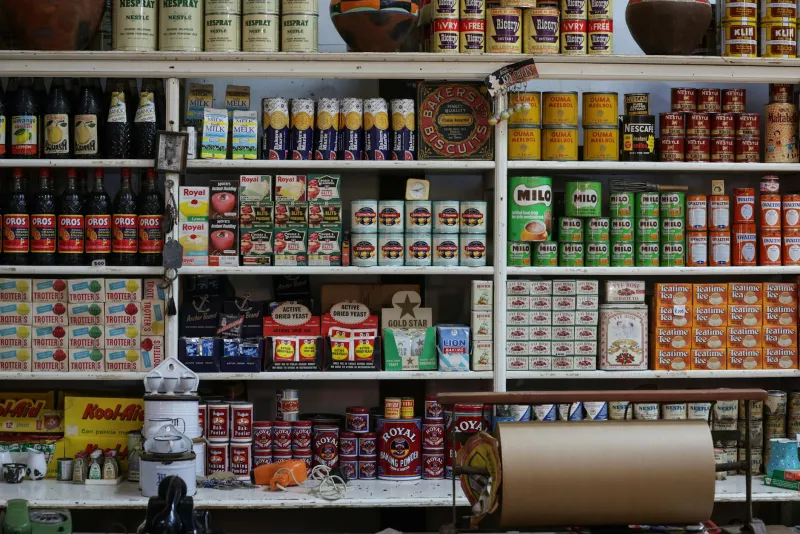
Shopping in the Dark
Walk down any grocery aisle today, and you're surrounded by information. Every package tells you exactly how many calories per serving, lists ingredients in order of quantity, and breaks down fat, protein, and carbohydrate content with scientific precision. This transparency feels so natural that it's hard to imagine shopping any other way.
But until remarkably recently — 1994, to be exact — American consumers navigated supermarket aisles in almost complete nutritional darkness. The Nutrition Facts label that now seems essential didn't exist. Neither did ingredient lists, serving size guidelines, or any meaningful way to compare the nutritional value of different foods.
Imagine trying to manage diabetes without knowing how many carbohydrates were in your breakfast cereal. Picture attempting to lose weight with no idea how many calories were in that frozen dinner. For most of American history, this wasn't a thought experiment — it was reality.
When Food Companies Kept Secrets
The food industry fought nutritional transparency with the determination of a state secret operation. Companies argued that revealing ingredients and nutritional content would confuse consumers, give away trade secrets, and impose impossible regulatory burdens on manufacturers.
This wasn't entirely paranoid thinking. Many processed foods of the 1970s and 1980s contained ingredients that would shock modern consumers. Breakfast cereals routinely contained more sugar per serving than candy bars. Frozen dinners packed more sodium than fast-food meals. "Diet" products often compensated for reduced fat with massive amounts of sugar and artificial additives.
Food companies had good reason to keep this information hidden. Without labels, consumers made purchasing decisions based on marketing claims, brand loyalty, and simple guesswork. A product labeled "natural" or "lite" could contain virtually anything, and most shoppers had no way to verify whether these claims meant anything at all.
The Scandal That Changed Everything
The push for food labeling gained momentum through a series of public health revelations that embarrassed the industry. In the 1980s, independent testing revealed that movie theater popcorn — marketed as a healthy snack — contained more saturated fat than a bacon cheeseburger. Restaurant chains claimed their "healthy" menu items were low in calories while serving meals that contained over 1,000 calories per portion.
The breaking point came when consumer advocates began testing popular foods and publishing the shocking results. A single muffin from a popular bakery chain contained over 600 calories and 11 grams of saturated fat. Chinese chicken salads at casual dining restaurants packed more calories than large pepperoni pizzas. "Heart-healthy" margarine contained trans fats that were actually worse for cardiovascular health than the butter they replaced.
These revelations created a public relations nightmare for food companies and built political momentum for mandatory labeling laws.
The Political Battle for Your Right to Know
The fight for food labeling became one of the most intense lobbying battles of the early 1990s. The food industry spent millions opposing any requirement to disclose nutritional information, arguing that it would increase costs, confuse consumers, and potentially hurt business for products that didn't measure up well nutritionally.
Supporters included an unlikely coalition of consumer advocates, health organizations, and budget-conscious shoppers who wanted to make informed decisions about their food purchases. The debate raged for years, with industry representatives testifying that nutritional labels would be too complex for average Americans to understand.
The breakthrough came when Congress realized that healthcare costs were skyrocketing partly due to diet-related diseases that could be prevented through better nutritional awareness. The economic argument proved decisive: giving consumers information to make healthier choices could reduce long-term medical expenses for both individuals and government programs.
What Shopping Looked Like Before Labels
To understand how dramatically food shopping has changed, consider what a 1985 grocery trip actually involved. Shoppers relied heavily on brand recognition, advertising claims, and simple visual cues to make food choices. A product labeled "low-fat" could legally contain substantial amounts of fat, as long as it had less fat than the "regular" version.
Price comparison was the primary decision-making tool for most families, but even that was complicated by unclear serving sizes. One brand might list their cereal nutrition "per ounce" while another used "per cup," making direct comparison impossible. Some products didn't list serving sizes at all, leaving consumers to guess whether nutritional claims applied to the entire package or some undefined portion.
Ingredient lists, when they existed at all, were often incomplete or deliberately obscure. Food companies used chemical names for common additives, listed ingredients in ways that disguised their quantities, and sometimes omitted ingredients entirely if they fell below certain thresholds.
The Science Behind Modern Labels
The Nutrition Labeling and Education Act of 1990 didn't just require companies to list ingredients — it established scientific standards for how nutritional information should be measured, calculated, and presented. For the first time, serving sizes were standardized across similar products, making comparison shopping possible.
 Photo: Nutrition Labeling and Education Act of 1990, via 0901.static.prezi.com
The familiar black-and-white Nutrition Facts panel was designed based on extensive consumer research to present complex information in the most understandable format possible. Every element, from the bold calorie count to the footnote explaining daily values, was tested with focus groups to ensure maximum comprehension.
Ingredient lists were required to be complete and listed in descending order by weight, giving consumers real insight into what they were eating. Terms like "natural flavor" and "spices" were still allowed, but major allergens had to be clearly identified.
How Labels Changed American Eating
The impact of nutritional labeling on American food choices was immediate and dramatic. Sales of high-sodium, high-sugar, and high-fat products declined as consumers could finally see what they were buying. Food companies responded by reformulating products to improve their nutritional profiles — not out of altruism, but because poor numbers on nutrition labels hurt sales.
The "low-fat" craze of the 1990s was largely driven by consumers' newfound ability to compare fat content across products. Unfortunately, many people focused exclusively on fat content while ignoring calories and sugar, leading to the ironic situation where "fat-free" foods often contained more calories than their full-fat counterparts.
Restaurant chains initially fought menu labeling requirements, but many eventually discovered that providing nutritional information actually helped sales by allowing health-conscious customers to make informed choices rather than avoiding restaurants entirely.
The Unfinished Revolution
Despite the progress made since 1994, significant gaps remain in food transparency. Restaurant meals still often lack detailed nutritional information, particularly at smaller establishments. Alcoholic beverages are largely exempt from labeling requirements. Fresh produce, meat, and seafood carry minimal nutritional information compared to packaged foods.
The rise of online grocery shopping has created new challenges, as consumers may not see physical labels when making purchasing decisions. Some retailers have adapted by displaying nutritional information prominently in their digital interfaces, while others bury it in hard-to-find product details.
When Information Became Power
The transformation from nutritional ignorance to label-driven awareness represents one of the most significant consumer protection victories of the late 20th century. What seems like basic information today — calories, fat content, ingredient lists — was revolutionary when it first appeared on packages.
The fight for food labeling proved that consumers, when given accurate information, make dramatically different choices than when kept in the dark. It demonstrated that transparency benefits not just individual health, but public health on a massive scale.
For Americans who grew up after 1994, it's almost impossible to imagine shopping without nutritional labels. But for previous generations, every meal was a leap of faith, every food choice a guess about what they were actually putting into their bodies. The simple black-and-white label on every package represents a hard-won victory in the battle for the right to know what we eat.