When Your Shirt Had a Local Address
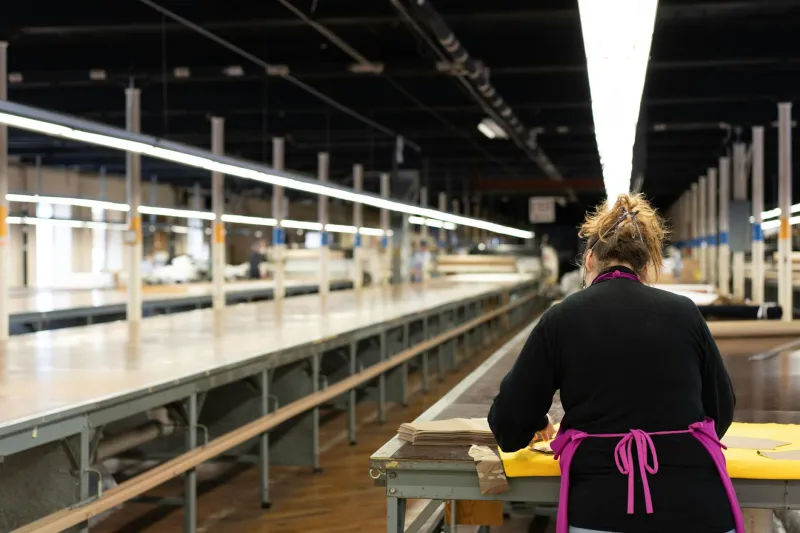
In 1965, Ruth Martinez clocked in at 7 AM sharp at the Levi Strauss factory in San Antonio, Texas. She'd spend the next eight hours guiding denim through industrial sewing machines, crafting jeans that would be sold in department stores across America. Her paycheck supported a middle-class lifestyle: a three-bedroom house, two cars, and enough left over to send her kids to college.
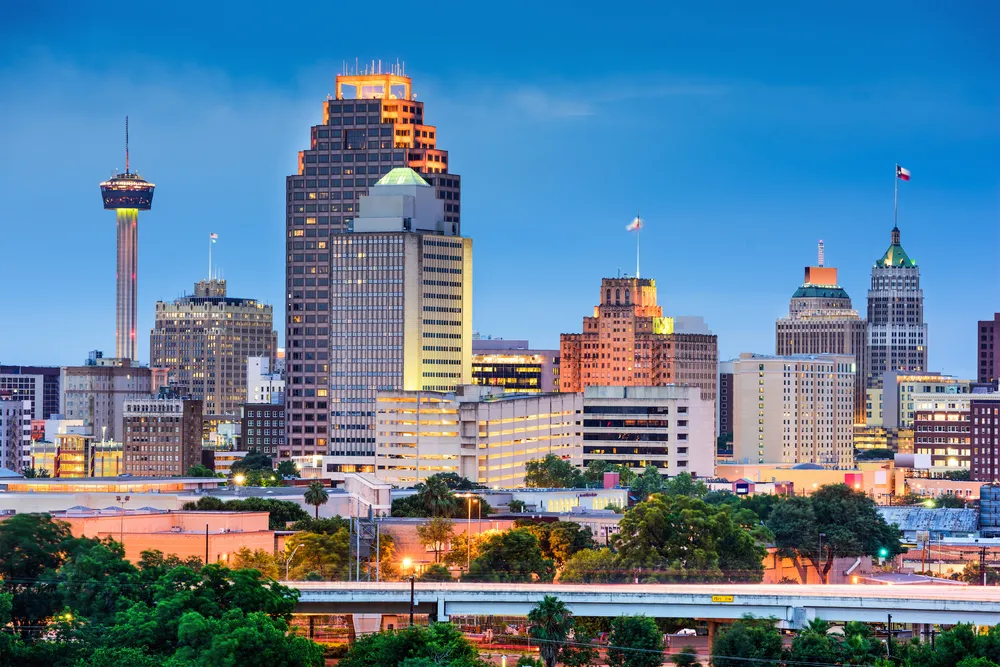 Photo: San Antonio, Texas, via xixerone.com
Ruth's story wasn't unique. From the textile mills of North Carolina to the garment districts of New York and Los Angeles, hundreds of thousands of Americans earned steady wages making the clothes their neighbors would wear.
The Numbers Tell the Story
In 1960, American factories produced 95% of the clothing purchased by American consumers. Walk into any department store, and the labels read like a geography lesson of American manufacturing: "Made in New York," "Sewn in North Carolina," "Crafted in California."
By 2018, that figure had collapsed to less than 3%. Today, the average American's closet contains clothes manufactured in over a dozen different countries, but almost none of them is the United States.
The Industrial Ecosystem
What disappeared wasn't just jobs – it was an entire industrial ecosystem. In cities like Fall River, Massachusetts, and Kannapolis, North Carolina, textile production created layers of supporting businesses. There were companies that made zippers, others that specialized in buttons, and still others that produced the dyes and fabrics.
 Photo: Fall River, Massachusetts, via www.touristsecrets.com
Local banks understood the seasonal rhythms of garment manufacturing. Equipment suppliers maintained repair services nearby. Even the local community college offered courses in textile technology and industrial sewing.
When the factories closed, all of these supporting businesses withered too.
The Grandmother Economy
Before mass production, most American families made their own clothes or relied on local seamstresses. But by the 1950s, domestic manufacturing had found a sweet spot: clothes were affordable enough for most families while still supporting good-paying jobs for American workers.
A dress that cost $12 in 1960 – about $120 in today's dollars – might have been sewn by a worker earning $2.50 per hour, equivalent to roughly $25 today. The economics worked because the entire supply chain, from cotton fields to retail stores, operated within American borders.
The Policy Avalanche
The transformation didn't happen overnight. It began with trade liberalization policies in the 1970s that reduced tariffs on imported textiles. The North American Free Trade Agreement in 1994 accelerated the shift, as did China's entry into the World Trade Organization in 2001.
Each policy change seemed modest in isolation, but together they created an avalanche. American manufacturers couldn't compete with factories paying workers $0.30 per hour in Bangladesh or $1.50 per hour in Mexico. One by one, they closed their doors.
The Levi Strauss factory where Ruth Martinez worked shut down in 2004, part of the company's decision to close all remaining U.S. manufacturing facilities. The building now houses a logistics center for online retailers.
The Speed Revolution
"Fast fashion" emerged as both a cause and consequence of this shift. Companies like H&M and Zara built business models around rapidly changing styles and rock-bottom prices. A dress that might have lasted for years became disposable, worn a few times before being discarded.
This was only possible because of the global supply chain. Designs could be sketched in New York, manufactured in Vietnam, and shipped to American stores within weeks. The speed and low cost came at the expense of durability and domestic employment.
What the Numbers Hide
The economic statistics make the shift look like pure progress. Clothing costs as a percentage of household income fell from 10% in 1960 to just 3% today. Americans can afford more clothes than ever before.
But these numbers hide what economists call "externalities." The environmental cost of shipping clothes around the world. The human cost of factory conditions in countries with weak labor protections. And the economic cost to American communities that lost their industrial base.
In Martinsville, Virginia, unemployment spiked to 20% after the last textile mill closed in 2009. The town's population has shrunk by nearly a third since 1980.
 Photo: Martinsville, Virginia, via c8.alamy.com
The Skills We Lost
When American clothing manufacturing disappeared, so did the accumulated knowledge of generations. The ability to cut patterns efficiently, to troubleshoot industrial sewing machines, to manage the complex logistics of garment production – these skills largely vanished from the American workforce.
Today, fashion schools teach design but rarely manufacturing. Young Americans interested in clothing careers learn to create concepts, not to make actual garments. The practical knowledge of how to turn cotton into clothing at scale became a lost art.
The Pandemic Wake-Up Call
COVID-19 exposed the fragility of global supply chains in unexpected ways. When overseas factories shut down, American retailers couldn't get inventory. More critically, the U.S. discovered it couldn't manufacture even basic items like surgical masks and medical gowns domestically.
Suddenly, the wisdom of maintaining some domestic manufacturing capacity became obvious. But rebuilding takes decades, and the skilled workforce that once existed is largely gone.
The True Cost of Cheap Clothes
That $8 t-shirt at Target represents a remarkable achievement in global logistics and manufacturing efficiency. But it also represents the dismantling of an American industrial ecosystem that once provided middle-class jobs to millions of workers.
Ruth Martinez, now retired, sometimes walks through department stores and checks the labels out of habit. "Everything's so cheap now," she says. "But I remember when buying American meant keeping your neighbors employed."
The shift from domestic to global clothing manufacturing may be the most dramatic industrial transformation in American history. We gained a closet full of affordable clothes, but we lost something harder to quantify: the economic foundation that once supported entire communities.