For Most of American History, a Medical Emergency Was Largely a Matter of Luck
For Most of American History, a Medical Emergency Was Largely a Matter of Luck
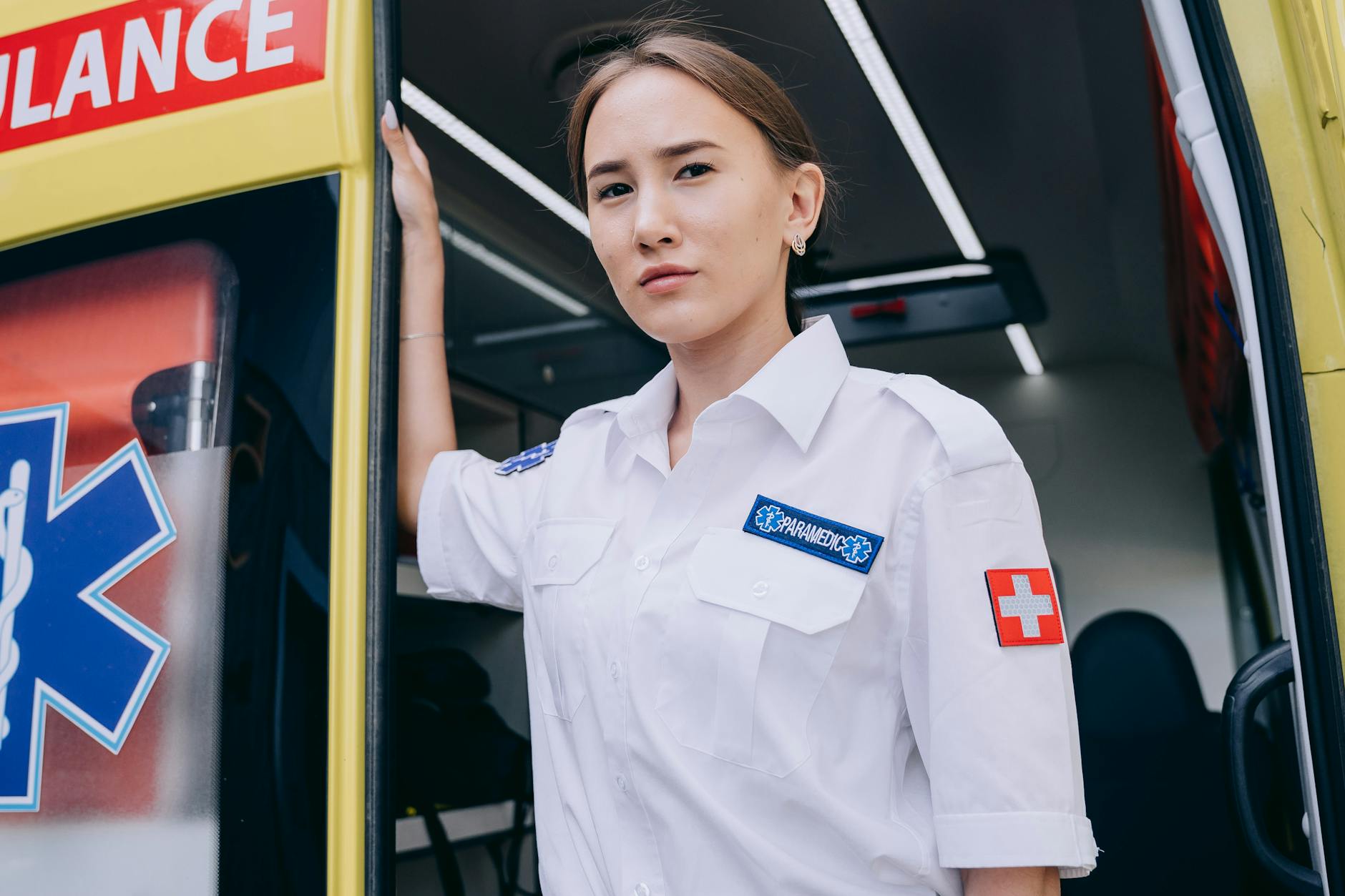
Somewhere in America right now, someone is having a heart attack. Within minutes, a dispatcher will pick up, a crew will roll, and a paramedic with years of clinical training will be working on that patient before they ever reach a hospital. Medications will be administered. A 12-lead EKG will be transmitted to the receiving emergency room. The odds of surviving that heart attack are, compared to any previous era in American history, remarkably good.
None of that infrastructure existed fifty years ago. And for most of American history, it didn't exist at all.
The story of emergency medical services in the United States is one of the most quietly dramatic transformations in the history of public health — a shift from a patchwork of improvised, undertrained, and wildly inconsistent responses to a coordinated system that now touches nearly every American life. It happened faster than most people realize, and it started from a baseline that, by modern standards, was barely a system at all.
When the Hearse Was the Ambulance
For much of the twentieth century, ambulance service in America was provided not by trained medical personnel, but by funeral homes. The logic was grimly practical: funeral homes already owned long vehicles capable of carrying a person lying flat. They were available around the clock. Nobody else was particularly organized to do the job.
The attendants who staffed these vehicles were not medically trained. Their job was transport — get the patient to the hospital and keep them alive long enough to hand them off to a doctor. What happened during that ride was largely improvised. There were no standard protocols, no equipment requirements, and no certification standards. What one city's "ambulance" carried might be completely different from what another's had. In rural areas, even this minimal service was often unavailable.
A 1966 report from the National Academy of Sciences — bluntly titled Accidental Death and Disability: The Neglected Disease of Modern Society — described the state of American emergency medical response in terms that were damning even by the standards of the time. It found that the average American would receive better emergency care on a Vietnam battlefield than on a US highway. Combat medics had protocols, training, and equipment. American ambulance attendants often had none of the above.
That report is now credited as the document that forced a national reckoning with emergency medicine. But change came slowly.
The 911 Problem
Even after communities began building more organized ambulance services, there was a fundamental communication problem: there was no single number to call.
In 1967, a Presidential commission recommended creating a universal emergency number. In 1968, AT&T designated 911 as that number. And then, for the next two decades, almost nothing happened quickly.
Rolling out 911 required cooperation between local governments, telephone companies, and dispatch agencies across thousands of jurisdictions. Some cities adopted it in the early 1970s. Others held out for years. Rural areas were often the last to get coverage. A fully standardized, nationally functional 911 system — the kind where calling that number from anywhere in the country reliably connects you to a local dispatcher — wasn't truly in place until well into the 1980s, and in some regions even later.
Before 911, reaching emergency services meant knowing the local number for police, fire, or whatever passed for an ambulance service in your area. In a genuine emergency — disoriented, panicked, possibly injured — that was a significant barrier. Telephone directories listed emergency numbers in the front pages, which assumed you had time to look. Many people didn't.
Building the Paramedic
The professional paramedic — someone trained not just to transport a patient but to perform advanced medical interventions in the field — is a surprisingly recent invention.
The Emergency Medical Services Systems Act of 1973 provided federal funding to develop regional EMS systems and pushed toward standardized training. Before this legislation, "EMT" was not a nationally recognized credential. Training requirements varied enormously by state and locality. In some places, the person driving the ambulance had taken a short first-aid course. In others, they had no formal medical training whatsoever.
The development of the paramedic curriculum — which includes skills like cardiac defibrillation, IV medication administration, advanced airway management, and 12-lead EKG interpretation — took shape through the 1970s and 1980s. Programs like the one developed in Seattle under Dr. Leonard Cobb and the Medic One system became national models, demonstrating that field-level interventions could meaningfully improve survival rates for cardiac arrest.
The numbers from Seattle were striking enough to get attention: communities with trained paramedic programs were saving cardiac arrest patients at rates that seemed almost impossible by the standards of the time. The data made the case that what happened in the first few minutes before hospital arrival wasn't a waiting period — it was treatment.
The Gap Between Then and Now
The contrast between emergency medical response in 1960 and emergency medical response today is almost difficult to fully absorb.
In 1960, if you collapsed from a heart attack in most American cities, the vehicle that arrived might be driven by someone whose primary profession was preparing bodies for burial. There was no defibrillator on board. There were no medications to administer. There was no hospital on the radio receiving real-time updates on your condition. There was a stretcher and a fast drive.
Today, the average response time for a 911 call in an urban area is under eight minutes. The crew that arrives carries defibrillators, epinephrine, aspirin, nitroglycerin, and a range of airway management tools. They are trained to interpret cardiac rhythms and transmit that data to an emergency physician before the patient arrives. In many systems, helicopter EMS can reach rural trauma patients in timeframes that would have been impossible by road.
Survival rates for out-of-hospital cardiac arrest have roughly doubled in communities with advanced EMS systems compared to those without. Trauma outcomes — for car accidents, falls, gunshot wounds — have shifted significantly as the time between injury and definitive care has compressed.
A System Built From Almost Nothing
What's remarkable about the modern American EMS system isn't just that it works — it's how recently it was built, and from how little.
The infrastructure that most Americans now take entirely for granted — dial three digits, trained help arrives quickly — was assembled within living memory, largely within a single generation's span. The people who built it were working against decades of institutional neglect, fragmented local control, and a healthcare system that had never really considered the space between "emergency happens" and "patient arrives at hospital" to be medicine at all.
It was. It just took a while for the country to figure that out.