Before the Stent, a Heart Attack Was Almost Certainly the End. Here's the Science That Changed That.
Before the Stent, a Heart Attack Was Almost Certainly the End. Here's the Science That Changed That.
Somewhere in America right now, someone is having a heart attack. Statistically, there's a reasonable chance they're going to be okay.
That sentence would have been almost unthinkable in 1950.
Back then, a myocardial infarction — the clinical term for what happens when blood flow to part of the heart is suddenly blocked — carried a death rate of somewhere between 30 and 40 percent in hospitalized patients. And that figure only counted the people who made it to a hospital. Many didn't. For them, the odds were far worse.
Today, the in-hospital mortality rate for heart attacks in the United States sits at around 5 to 6 percent. That shift — from a one-in-three chance of dying to a one-in-twenty chance — didn't happen by accident. It's the result of a series of medical breakthroughs, each one building on the last, that have fundamentally rewritten what a heart attack means for the person experiencing it.
What "Treatment" Used to Look Like
For much of the first half of the twentieth century, the medical response to a heart attack was almost shockingly passive by modern standards. Patients were admitted to a general hospital ward, confined to strict bed rest for six weeks or more, and given morphine for the pain. Beyond that, there wasn't much doctors could do. The prevailing belief was that the damaged heart needed stillness and time — and that exertion of any kind, even sitting up in bed too soon, could trigger a fatal second event.
This wasn't negligence. It was simply the ceiling of what medicine understood and could offer at the time. The underlying biology of heart attacks — the role of blood clots, the mechanics of arterial blockage, the electrical instability that causes sudden cardiac arrest — wasn't yet fully mapped. Without that knowledge, targeted treatment was impossible.
The result was that patients who survived the initial event often spent weeks in bed, emerged physically weakened, and faced a high risk of dying from a subsequent attack within the following year. A heart attack wasn't just a medical crisis. For many Americans, it was a life sentence.
The Breakthroughs That Bent the Curve
The first major turning point came in the early 1960s, and it arrived from an unexpected direction: a technique for restarting a stopped heart.
CPR — cardiopulmonary resuscitation — was formally described in a landmark 1960 paper by Dr. William Kouwenhoven and colleagues at Johns Hopkins. The idea that chest compressions and rescue breathing could keep blood circulating in a person whose heart had stopped, buying time until more advanced care arrived, was genuinely revolutionary. Combined with the development of the external defibrillator around the same period, it created the possibility of surviving cardiac arrest outside a hospital — something that had previously been almost unheard of.
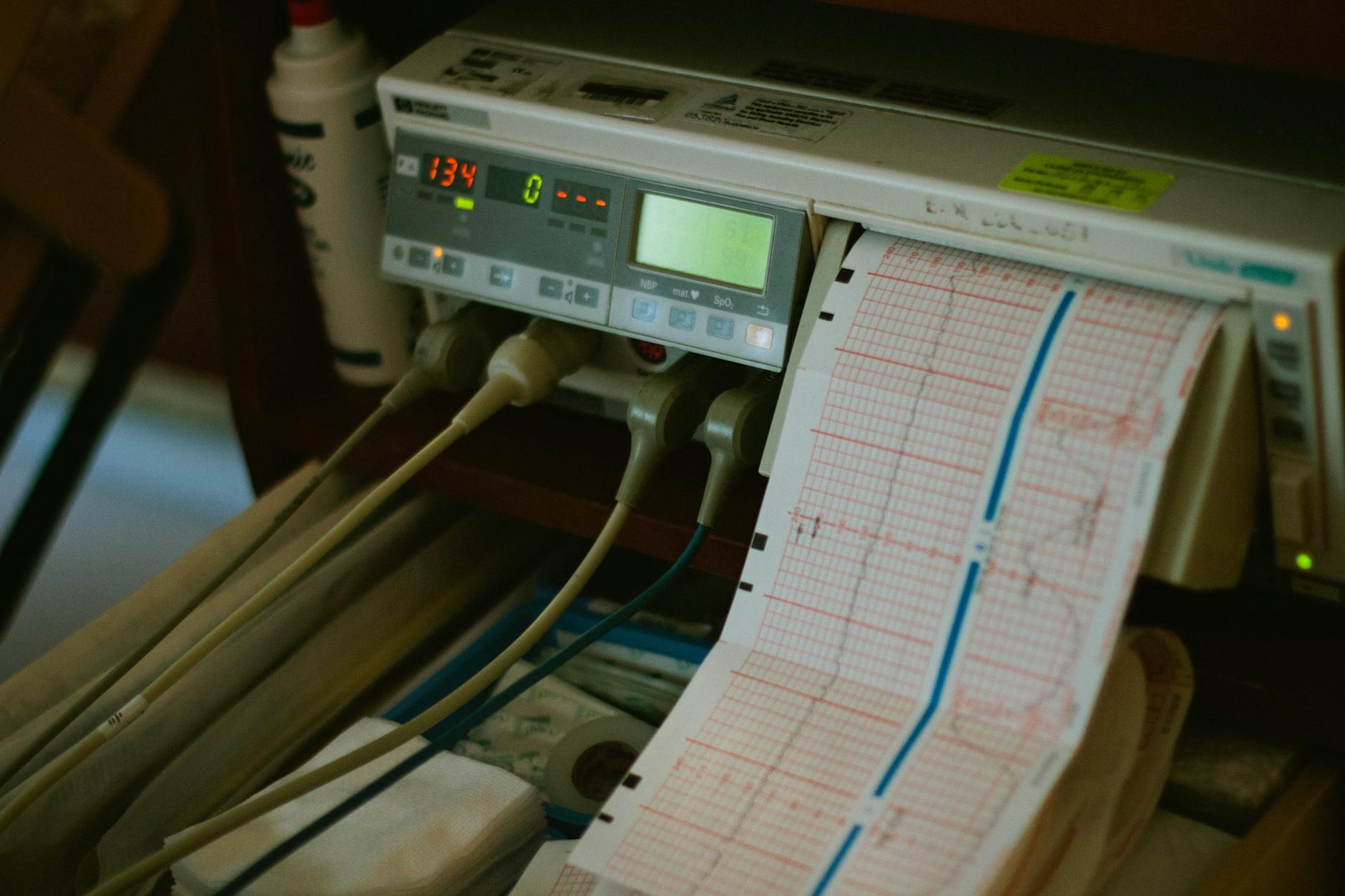
Almost simultaneously, a physician named Desmond Julian in the United Kingdom proposed a radical idea: that patients who had suffered heart attacks should be grouped together in dedicated hospital units where their heart rhythms could be continuously monitored. The first coronary care units, or CCUs, opened in the early 1960s. The logic was simple but powerful — if doctors could detect the dangerous arrhythmias that killed heart attack patients before they became fatal, they could intervene in time. Early data showed that CCUs cut in-hospital heart attack mortality dramatically. By the end of the decade, they were standard in major American hospitals.
The next wave of progress came from chemistry. In the 1980s, researchers demonstrated that drugs called thrombolytics — clot-busting medications — could dissolve the arterial blockages causing heart attacks if administered quickly enough. For the first time, it was possible to actually treat the underlying event rather than simply manage its aftermath. The phrase "time is muscle" entered the cardiology lexicon, reflecting the new understanding that every minute of blocked blood flow destroyed more heart tissue — and that speed of treatment was directly tied to survival.
The Modern Era: Opening the Artery
The development that perhaps most defines contemporary cardiac care is the coronary stent — a tiny mesh tube that can be threaded through the arteries and expanded to hold a blocked vessel open. Combined with balloon angioplasty, which physically compresses arterial plaques, stenting transformed the treatment of heart attacks from a waiting game into a direct mechanical intervention.
Today, the standard of care for a major heart attack in the United States is a procedure called primary percutaneous coronary intervention, or primary PCI. When a patient arrives at an emergency room with a heart attack in progress, the goal is to get them to a catheterization lab and have the blocked artery opened within 90 minutes of their arrival. In well-resourced hospital systems, that benchmark is met routinely.
The drugs have improved too. Modern antiplatelet medications, beta-blockers, statins, and ACE inhibitors have reduced the risk of second heart attacks and improved long-term outcomes in ways that were unimaginable to cardiologists practicing even 40 years ago.
A Survivable Event
None of this means a heart attack is trivial. It remains a serious, life-altering medical emergency, and outcomes still vary significantly based on factors like age, overall health, and how quickly treatment begins. Heart disease is still the leading cause of death in the United States.
But the trajectory is unmistakable. A diagnosis that once carried overwhelming odds of death has become, for the majority of Americans who experience it, something they survive. Many return to full and active lives. Some barely miss a beat.
That change happened within a single human lifetime — and it's one of the most quietly extraordinary achievements in the history of American medicine.