Your Emergency Call Used to Require Perfect Memory Under Pressure
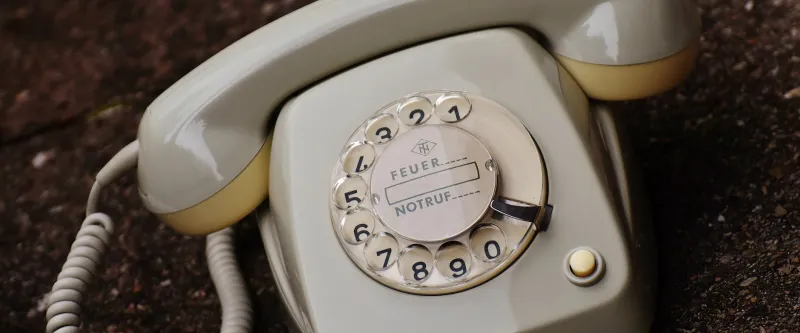
Picture this: your neighbor is having a heart attack, and you need to call for help. Today, you'd dial 911 without thinking. But if this happened in 1975, you'd need to remember that the fire department was 555-3847, the police were 555-2901, and the ambulance service — if your town even had one — might be run by the local funeral home at 555-6623.
When Every Town Had Its Own Emergency Numbers
For most of American history, emergency response was a patchwork of local services with no standardized way to reach them. Each municipality chose its own phone numbers for police, fire, and medical services. These seven-digit numbers were typically listed in phone books or posted on stickers that people were supposed to keep by their phones — assuming they remembered to look them up ahead of time.
The problem became obvious during actual emergencies. Under stress, people forgot numbers, dialed wrong, or wasted precious minutes flipping through phone books. A study from the late 1960s found that the average person could remember only two or three emergency numbers reliably, and that was under normal conditions, not while their house was burning down.
Rural America's Emergency Gap
Urban areas at least had dedicated emergency services, even if reaching them was complicated. Rural America faced a more fundamental problem: many areas had no coordinated emergency response at all.
In farming communities across the Midwest, "calling for help" often meant calling the sheriff's home phone number — if you knew it. Fire protection might be handled by a volunteer department that met at someone's garage. Ambulance service was frequently provided by funeral homes, since they owned the only vehicles long enough to transport a stretcher.
This system worked reasonably well when everyone knew everyone else, but it created dangerous gaps. Visitors, new residents, or anyone calling from an unfamiliar area were often out of luck. A tourist having a medical emergency in rural Montana might spend crucial minutes trying to figure out who to call, while that same emergency in their hometown would have been resolved with a quick dial to their local numbers.
The Push for a Universal Number
The idea for a single emergency number emerged in the 1950s, but implementation took decades. The Federal Communications Commission designated 911 as the national emergency number in 1972, but rolling it out required massive coordination between phone companies, local governments, and emergency services.
Each area had to upgrade their phone systems to route 911 calls properly. Emergency services had to reorganize their operations to handle calls from a central dispatch. Most challenging of all, communities had to agree to work together — something that wasn't always easy when neighboring towns had been handling their own emergencies independently for generations.
The first 911 call was made in Haleyville, Alabama, in 1968, but the system didn't reach nationwide coverage until 1987. That means Americans born before 1970 spent their childhood and early adult years in a world where calling for help required local knowledge that could mean the difference between life and death.
When Geography Determined Your Chances
The old system created stark inequalities in emergency response. Wealthy suburban areas might have well-organized services with widely publicized phone numbers. Poor urban neighborhoods might have slower response times and less reliable systems. Rural areas were often on their own entirely.
Consider what happened during natural disasters. When a tornado hit a small town, outside help had to figure out who to contact for coordination. There was no central number that would connect them to local emergency services. Relief efforts were delayed while responders tried to establish communication with whoever happened to be in charge locally.
Even routine emergencies became complicated when they crossed jurisdictional lines. A car accident on a county road might require calls to multiple agencies, each with their own phone number. By the time help arrived, the situation could have deteriorated significantly.
Today's Invisible Infrastructure
Modern 911 systems seem almost magical compared to the old patchwork. Today's calls are automatically routed to the nearest appropriate dispatch center based on your location. Dispatchers can see your phone number and, increasingly, your exact GPS coordinates. Text messaging to 911 is becoming standard, and some systems can even receive photos or video from the scene.
This infrastructure is so reliable that most Americans never think about it. The idea that emergency services might not be instantly available seems unthinkable. But this seamless system is barely forty years old — newer than the personal computer, the internet, or cell phones.
The Last Mile
Even today, the transformation isn't complete. Enhanced 911 services that can pinpoint cell phone locations are still being upgraded in some areas. Rural regions continue to face challenges with coverage and response times. But the basic promise — that any American can dial three digits and reach help — represents one of the most successful public infrastructure projects in modern history.
The next time you see those three digits, remember that they represent decades of coordination, billions in infrastructure investment, and a fundamental shift in how America thinks about emergency response. Your grandparents lived in a world where calling for help was a local affair that required local knowledge. Today, help is just three digits away, no matter where you are.