Three Weeks of Mud, Misery, and Mechanical Failure: The Lost Ordeal of Driving Across America
Three Weeks of Mud, Misery, and Mechanical Failure: The Lost Ordeal of Driving Across America
Picture this: you've packed your car, mapped a rough route, and you're about to drive from New York to Los Angeles. Your GPS is locked on. You've got a full tank, a solid playlist, and a reservation at a motel in Ohio tonight. With a bit of determination and a reasonable rotation of drivers, you'll be pulling into Southern California in about four days.
Now forget all of that.
Wind the clock back to 1910. You still want to drive across America — but the journey you're about to take looks almost nothing like the one above. In fact, it barely resembles anything we'd recognize as a road trip today.
The Road That Wasn't Really a Road
In the early twentieth century, America had cars. What it didn't have was anywhere sensible to drive them. Paved roads were a luxury confined almost entirely to cities. Once you left the urban grid, you were at the mercy of whatever the land offered — rutted dirt tracks, muddy farm paths, and stretches of open terrain where the "road" was essentially a rumor.
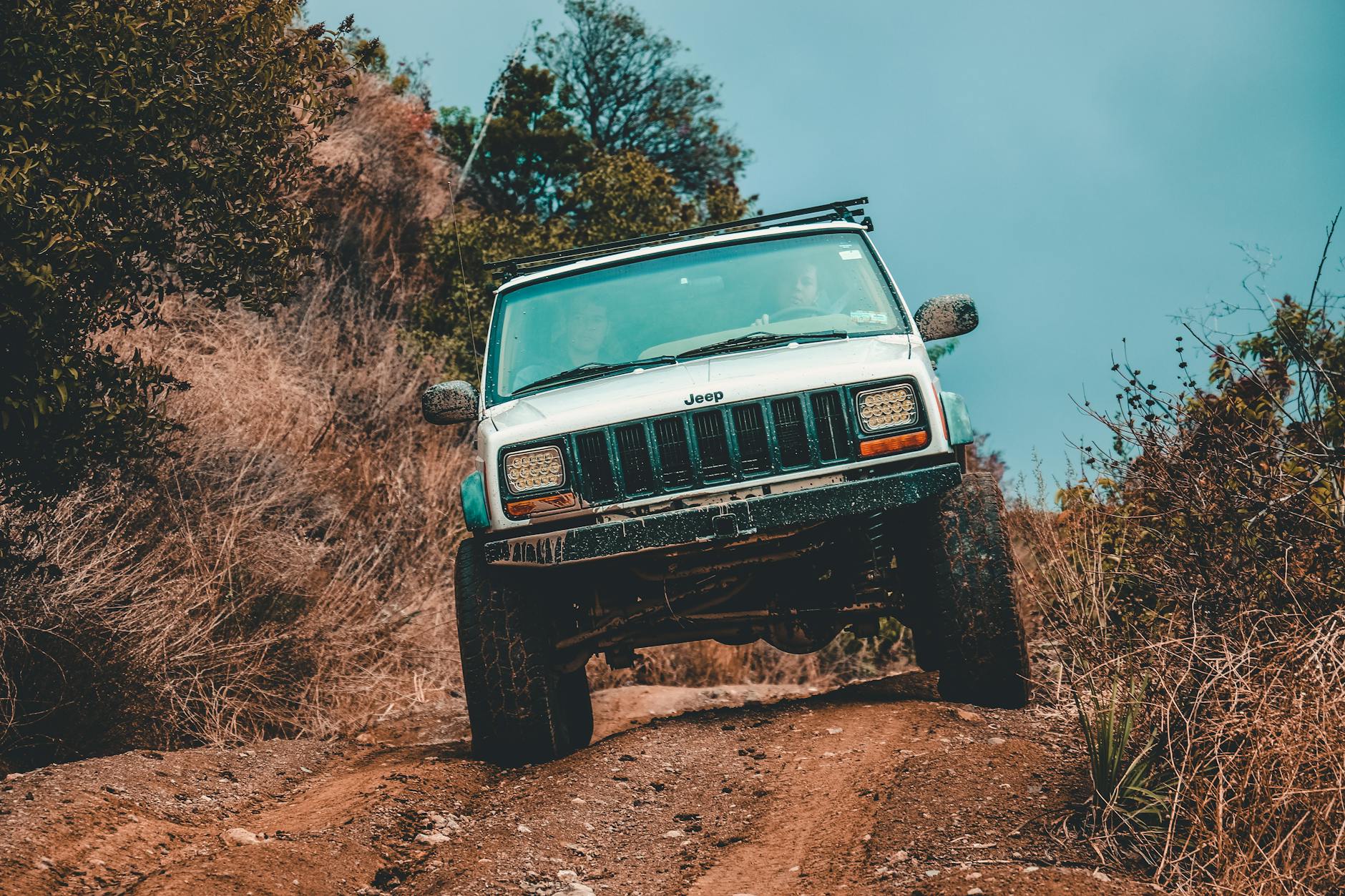
The Lincoln Highway, which opened in 1913 as the country's first coast-to-coast route, was a landmark achievement. It was also, for much of its length, a mess. Large sections remained unpaved well into the 1920s. In states like Iowa and Nebraska, spring rains could turn the highway into a swamp overnight. Drivers regularly found themselves axle-deep in mud, waiting hours — sometimes days — for conditions to improve or for a local farmer with a horse to haul them out.
Navigation was its own ordeal. There were no road signs to speak of, no standardized maps, and certainly no turn-by-turn directions. Early road travelers relied on guidebooks published by automobile clubs, which gave instructions like "turn left at the red barn" — helpful until the barn burned down. Some routes were marked by colored bands painted on telephone poles, a system that required you to already know which colors corresponded to which roads. Getting lost wasn't an occasional inconvenience. It was part of the trip.
Cars That Couldn't Be Trusted
The vehicles themselves added another layer of uncertainty. Early automobiles were mechanically temperamental by modern standards — prone to overheating, tire blowouts, and engine failures that could strand a driver in the middle of nowhere for hours. A cross-country traveler in the 1910s or 1920s was expected to carry a toolkit and know how to use it. Changing a tire wasn't a roadside inconvenience; it was a near-daily ritual. Some accounts from early transcontinental drivers describe changing upward of a dozen tires over the course of a single trip.
Gas stations were sparse outside of populated areas, so travelers often carried extra fuel in cans strapped to the running boards. Finding food, water, and lodging required planning and luck in equal measure. Hotels catering to motorists — what we'd eventually call motels — didn't really exist yet. Drivers camped along the roadside, slept in their cars, or knocked on farmhouse doors hoping for a bed.
Under these conditions, the coast-to-coast crossing took weeks. Early documented drives from New York to San Francisco or Los Angeles ranged from around three weeks to well over a month, depending on the season, the route, and how badly things went wrong.
The Shift That Changed Everything
The transformation didn't happen all at once. It came in layers over several decades.
The Federal Aid Highway Act of 1956 was the single biggest leap forward. Signed by President Eisenhower — who had been personally rattled by the state of American roads after observing Germany's Autobahn during World War II — the legislation funded the construction of 41,000 miles of interstate highway. Suddenly, drivers had access to wide, well-maintained, standardized roads that bypassed the small towns and treacherous back routes that had defined earlier travel.
Cars became dramatically more reliable through the mid-twentieth century. Tire technology improved. Fuel injection replaced carburetors. Air conditioning made summer driving survivable in the Southwest. And the proliferation of chain motels, fast food restaurants, and highway gas stations meant that the logistical puzzle of cross-country travel had largely been solved before you even left your driveway.
GPS navigation — first available to consumers in the 1990s and now embedded in every smartphone — finished the job. The idea of getting genuinely lost on an American highway has become almost quaint.
Four Days vs. Four Weeks
Today, a New York to Los Angeles drive covers roughly 2,800 miles and takes most people between 40 and 45 hours of actual driving time. Spread across four days, that's a manageable, even enjoyable experience for millions of Americans every year.
A century ago, the same journey was an undertaking that demanded mechanical skill, physical endurance, and a high tolerance for uncertainty. The people who attempted it weren't just travelers — they were, in a real sense, pioneers.
It's easy to take the open road for granted. But the next time you merge onto an interstate with your GPS chirping directions and your cruise control set, it's worth pausing to appreciate just how recently that kind of effortless travel became possible. The American road trip as we know it is, historically speaking, a very new invention.