The Season That Determined Whether You Lived or Died
Imagine planning your entire year around a single question: will we have enough food to survive until the vegetables grow back? For most of American history, this wasn't hypothetical—it was the difference between making it through winter and slowly starving as the snow piled up outside.
Your great-great-grandmother didn't meal prep on Sunday afternoons. She meal prepped from July through October, frantically racing against the first frost to preserve every scrap of food that would keep her family alive until spring.
When August Meant Life or Death
Walk through any American farmhouse in August 1890, and you'd find a scene that would exhaust a modern family: women and children hunched over steaming kettles, processing mountains of vegetables in stifling heat. The kitchen became a factory, running from dawn until well past dark.
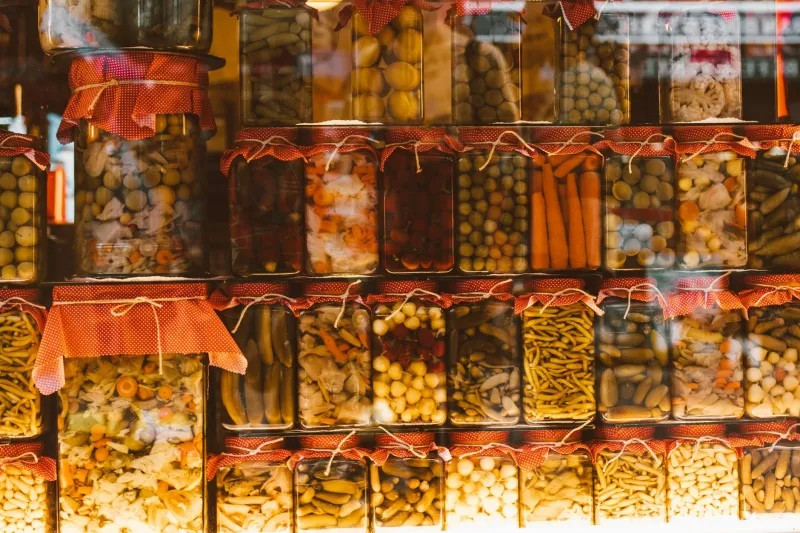
Canning wasn't a hobby—it was survival. A failed batch of preserves could mean the difference between eating and hunger in February. Women memorized the telltale signs of botulism, spoilage, and proper sealing because their families' lives depended on getting it right.
The pressure was immense. Entire communities shared knowledge about which vegetables canned best, how to prevent spoilage, and what to do when the harvest failed. Recipe exchanges weren't about flavor—they were about nutrition that would last six months in a root cellar.
The Root Cellar: America's First Refrigerator
Every farmhouse had its root cellar, a carefully engineered underground room that served as the family's food storage system. These weren't simple holes in the ground—they were precisely designed spaces that maintained temperatures just above freezing while preventing the dampness that would rot stored food.
Families stored potatoes, turnips, carrots, and apples in these cellars, along with barrels of salt pork, crocks of sauerkraut, and shelves of canned goods. A well-stocked root cellar in October meant survival. A poorly managed one meant hunger.
The work was backbreaking. Potatoes had to be sorted regularly to remove any showing signs of rot—one bad potato could destroy an entire bin. Apples were wrapped individually in newspaper and checked weekly. Salt pork required constant monitoring for spoilage.
When Meat Meant Salt, Smoke, and Prayers
Without refrigeration, preserving meat became an art form that determined whether families had protein through the winter. The autumn pig slaughter was a community event because the entire animal had to be processed within hours of death.
Families developed elaborate systems for smoking, salting, and drying meat. Every scrap was used—nothing could be wasted. The fat became lard for cooking and preserving. The bones were boiled for broth and then ground for meal. Even the blood was preserved in sausages.
A failed preservation job meant losing months of protein. Families who couldn't properly cure their meat faced winter with only vegetables and grains—a diet that often led to malnutrition and scurvy.
The Hunger Months
By March and April, even well-prepared families were scraping the bottom of their storage. These were called the "hunger months"—when last year's harvest was running out but this year's crops weren't ready yet.
Families rationed carefully, stretching their remaining supplies with wild plants, tree bark, and anything else that could provide calories. Children learned to identify edible plants and mushrooms because their lives might depend on it.
Urban families faced different but equally serious challenges. Without access to farms, they depended on seasonal availability and whatever could be shipped without spoiling. Winter diets in cities consisted largely of salted meat, dried goods, and whatever vegetables could survive transport from warmer climates.
Enter Clarence Birdseye: The Man Who Killed Seasonal Eating
In 1912, a young naturalist named Clarence Birdseye was working in Labrador when he noticed something remarkable: fish caught in the Arctic cold froze so quickly that they tasted fresh when thawed months later. The secret was speed—rapid freezing created smaller ice crystals that didn't damage the food's cellular structure.
Birdseye spent the next decade perfecting flash-freezing techniques. By the 1920s, he had developed machinery that could freeze food in minutes rather than hours, preserving both nutrition and flavor in ways that traditional preservation methods couldn't match.
The first frozen foods appeared in American stores in 1930, but it took decades for the infrastructure to catch up. Stores needed freezers, homes needed freezers, and transportation networks needed refrigerated trucks and trains.
The Infrastructure Revolution
The shift to frozen food required rebuilding America's entire food distribution system. Grocery stores installed freezer cases. Manufacturers built frozen food plants. The government created standards for frozen food safety and transportation.
By the 1950s, the frozen food industry had become a billion-dollar business. Families could buy vegetables in January that tasted like they were picked in July. Seasonal eating—the pattern that had governed human nutrition for millennia—became optional almost overnight.
What We Lost (And Gained)
The frozen food revolution freed American families from the exhausting cycle of seasonal preservation. Women could work outside the home instead of spending summers canning. Children could grow up without the constant anxiety about winter food supplies.
But something was lost too. The deep knowledge of food preservation, the community cooperation around harvest time, and the intimate connection between seasons and eating all faded within a single generation.
Modern Americans eat strawberries in December and asparagus in February without thinking twice about it. We've gained incredible convenience and nutrition security, but we've lost the rhythm that connected our ancestors to the natural world.
The Modern Paradox
Today, Americans spend billions on frozen foods that would have seemed miraculous to their great-grandparents. We have freezers full of food that will last for months, yet we still go grocery shopping multiple times per week.
The same technology that freed us from seasonal hunger has also disconnected us from seasonal eating. We've solved the problem of food preservation so thoroughly that many Americans have never experienced true hunger or the anxiety of wondering whether there will be enough food to last the winter.
The next time you grab frozen vegetables from your freezer in January, remember: you're participating in a revolution that completely transformed how humans relate to food, seasons, and survival itself. Your great-grandmother would have considered your freezer a miracle—and she would have been absolutely right.